10-hryvnia message: NBU issues coins honoring Zaporizhzhia, Kharkiv and Kherson regions
On the fourth anniversary of the full-scale invasion, the National Bank put three commemorative coins from the "We Are Strong. We Are Together." series into circulation. This is not just a symbol — tens of millions of coins will appear in Ukrainians' wallets and become part of the collective memory.

By Tetiana Suchkova-Ladik
February 24, 2026 · 3 min read
What happened
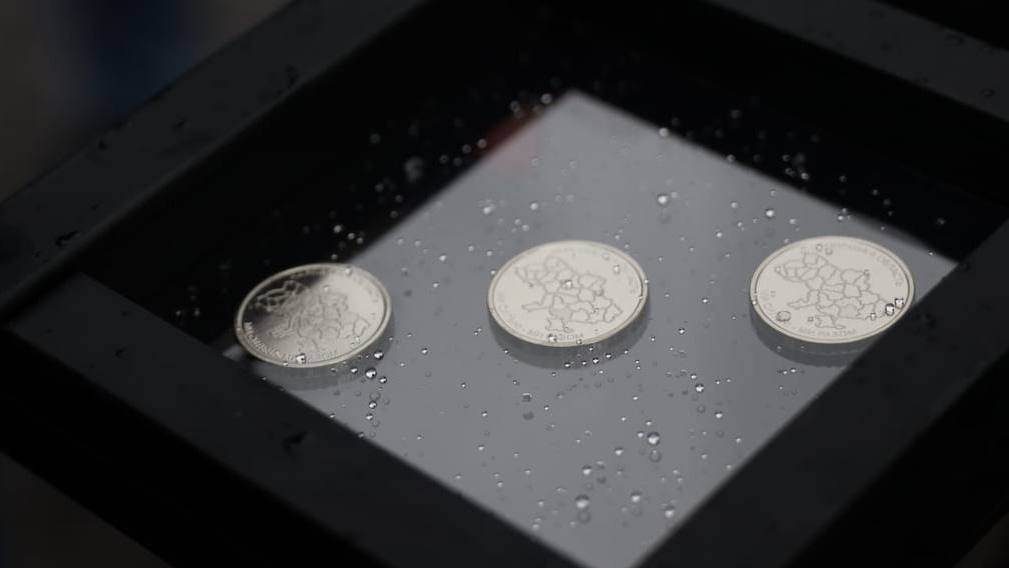
The National Bank of Ukraine has officially introduced into circulation three new circulating commemorative coins with a face value of 10-hryvnia from the series «We are strong. We are together», dedicated to the Zaporizhzhia, Kharkiv and Kherson Oblasts. The presentation took place on the island of Khortytsia on 24 February — the fourth anniversary of Russia’s full-scale invasion, the NBU press service reported.
“This is not just 10 hryvnias, this is a sign of memory, a recording of our resilience in history. Because a state that fights must speak not only with weapons, but also with symbols that shape national memory. We are strong because we know what we are fighting for. We are together because we understand that only together will we win.”
— Pyshnyi, a representative of the National Bank
Why it matters
A circulating coin is not only a numismatic exhibit for collectors. It is an everyday object that touches broad layers of society: in wallets, at tills, in shops. The NBU is taking a symbolic step that also has a practical effect — the message of unity and resilience is spread daily when people exchange money.
The timing of the presentation adds extra context. The date recalls the start of a new stage in the struggle for statehood and emphasizes that state institutions use symbols to consolidate society.
Technical details
The obverse of all three coins is identical to the obverse of the 10-hryvnia circulation coin of the 2018 design: the denomination, the year of minting, the state coat of arms in the center framed by an Old Rus' ornament. On the reverse is a stylized map of Ukraine with clearly delineated administrative borders and an image of the corresponding oblast.
The reverse design was created by artist Oleksandra Kuchynska, and the author of the obverse and sculptor is Volodymyr Dem'yanenko. The coins are legal tender on the territory of Ukraine.
Issuance plan: 2 million pieces of each of the three coins will be gradually put into cash circulation. Part of the mintage will be packaged in rolls of 25 coins; the mintage of each roll is 15,000 pieces. Individual sets will be available for purchase in the NBU’s online numismatic store and from distributing banks.
The series, launched on 1 December 2025, replaced the previous reverse image — hetman Ivan Mazepa — with a stylized map of Ukraine. The NBU plans to continue issuing coins in this series in 2026–2027; the total planned mintage will amount to 54 million coins.
What it changes
First, it is a way for the state to shape public memory through everyday objects. Second, the scale of the release makes the coin not just a rare souvenir but part of the money supply — therefore the message reaches a wide audience. Third, for numismatists and regional communities this is a new opportunity to record the history of the war in a long-lasting material form.
The numismatic community and cultural institutions regard such releases as an important element of the state’s cultural strategy during the war: symbols that circulate in everyday life strengthen the sense of togetherness without undue pomposity.
Conclusion
The NBU has chosen mass symbolism: 10-hryvnia coins have the potential to become part of the everyday memory of frontline regions. The next question is how these symbols will be used in state communication and regional initiatives so as not only to mark, but also to support the recovery and security of communities.