132 sq m in central Kyiv that an MP couldn't afford: how the NABU calculated 12.7 million
In 2020–2021, a deputy of the Verkhovna Rada of the ninth convocation acquired an apartment in the center of the capital and other assets worth 12.7 million hryvnias beyond his official income — and retains his mandate to this day.

By Tetiana Suchkova-Ladik
April 6, 2026 · 3 min read
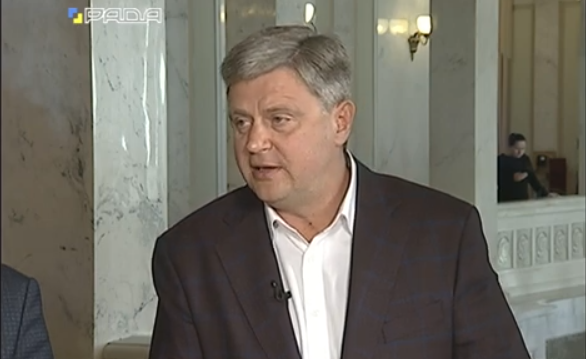
On April 6, the National Anti-Corruption Bureau (NABU) and the Specialized Anti-Corruption Prosecutor's Office announced suspicion against a current member of Parliament of Ukraine of the ninth convocation. The charge is Article 368-5 of the Criminal Code, illicit enrichment. The amount that the investigation cannot explain with declared income: over 12.7 million hryvnias.
What was purchased — and what could not have been
According to the investigation, in 2020–2021, the suspect became the owner of several assets whose value significantly exceeds official income and savings for the same period. Among the documented property is an apartment of 132.6 square meters in central Kyiv, as well as other movable and immovable property.
The mechanism is typical for similar NABU cases: some assets are registered not in the name of the deputy himself, but in the names of close relatives. This is how, according to the prosecution's version in the case of MP Andriy Klochko, a Tesla, Mercedes-Benz, land plots, and apartments in the capital were concealed — all transferred to his mother and sister.
How many such cases are there and what is happening with them
The new suspicion is no exception. According to Ukrayinska Pravda, citing NABU and the Specialized Anti-Corruption Prosecutor's Office, at least 34 MPs of the ninth convocation have suspicions of corruption crimes, and indictments against 26 of them have already been sent to court.
The first actual conviction in this category of cases occurred only in March 2025 — and that was under a guilty plea agreement. Former Servant of the People MP Irina Kormyshkina received 5 years conditionally and was obligated to return 20 million hryvnias to the state budget and another 2 million hryvnias to the Armed Forces. She also resigned her mandate before the verdict was issued.
"After opening the proceedings, the case was transferred to NABU and the Specialized Anti-Corruption Prosecutor's Office for investigation and verification of the facts stated in our statement. And here we have the result."
Center for Countering Corruption — following the announcement of suspicion against Kormyshkina
The problem is not the absence of suspicions — there are dozens of them. The problem is that suspicion does not stop a mandate. A deputy with suspicion from NABU continues to vote in the Verkhovna Rada, receive a salary, and serve on committees. In July 2025, some such MPs voted for a bill that, according to anti-corruption organizations' assessments, was intended to weaken the institutional independence of NABU and the Specialized Anti-Corruption Prosecutor's Office.
What does "illicit enrichment" mean legally
Article 368-5 of the Criminal Code is relatively new: it came into force in 2019. It does not require proving where the money came from — it is sufficient to show that the assets do not correspond to declared income. The penalty: 5 to 10 years imprisonment with deprivation of the right to hold office for up to 3 years.
In practice, as documented by the 24 TV channel, over six years of the article's application, actual convictions number in single digits, and almost all of them — under guilty plea agreements, where the punishment is reduced.
The current suspect's name has not yet been made public — NABU and the Specialized Anti-Corruption Prosecutor's Office follow the practice of not disclosing names until a certain procedural stage. But the apartment in central Kyiv with 132 square meters has already been seized or is subject to investigative measures.
A telling detail: 2020–2021, when the property was being purchased, was the height of the pandemic and economic contraction. For most Ukrainians — years of frozen salaries and layoffs. For some deputies, as evidenced by NABU case materials, — years of actively expanding real estate holdings.
If the case reaches the High Anti-Corruption Court without a guilty plea agreement — for the first time since 2019, the court will have an opportunity to issue a full verdict on the article about illicit enrichment against a sitting deputy. Whether the prosecution will pursue a principled trial will depend on whether the suspect retains his mandate until the time of the trial on the merits.