"200 Companies and 18 Billion: How 'Black Accounting' Became a Service for Real Business"
The SBU and the Office of the Prosecutor General exposed a currency exchange center that had been operating for five years — and inadvertently revealed a list of 200 clients, each of whom is also a subject of criminal proceedings.

By Tetiana Suchkova-Ladik
April 27, 2026 · 3 min read
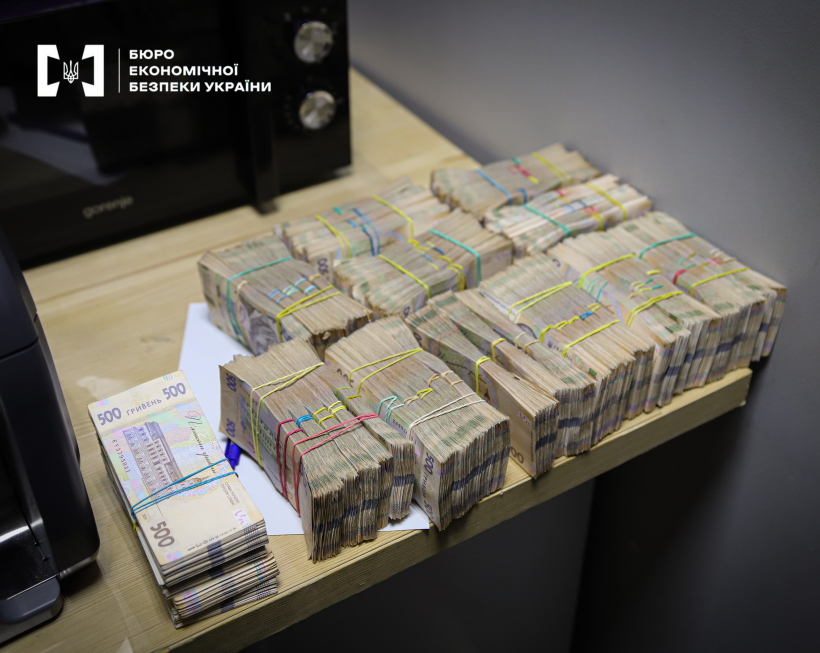
The Bureau of Economic Security and the Office of the General Prosecutor announced the dismantling of a currency conversion center that, since 2020, has served over 200 enterprises and, according to the investigation, processed 18 billion hryvnias. But the most interesting detail in the case is not the amount, but who exactly stands on both sides of the scheme.
How the "service" worked
The mechanism is classic for the Ukrainian shadow market, but the scale is atypical. The center registered a network of fictitious enterprises using front persons. These structures entered into contracts with clients — typically for construction work that was never performed. The client received primary documentation, increased their tax credit on its basis, and reduced their VAT and corporate income tax obligations to the budget.
Simply put: a business paid the conversion center less than it should have paid to the state — and received "official" cover in the form of papers about non-existent work. The conversion center profited from the difference. The scheme existed for five years.
"The total volume of converted funds since 2020 is estimated at 18 billion hryvnias. The damage to the state in the form of lost tax revenues for individual documented facts alone amounted to over 56 million hryvnias"
— Bureau of Economic Security of Ukraine and Office of the General Prosecutor
The gap between 18 billion and 56 million: what does it mean
The figures differ by a factor of 320. The officially documented damage — 56 million hryvnias — is only what the investigation was able to prove documentarily at the time of announcing suspicions. The BEB directly states: "for individual documented facts." The remaining 18 billion in turnover is documented money movement through accounts of controlled structures, but not the entire amount automatically equals budget damage.
This is a standard problem in such cases: proving tax damage for each transaction is more difficult than documenting the fact of money movement itself. The actual amount of lost taxes could be significantly higher — the investigation continues.
Clients are also suspects
Over 200 enterprises that used the scheme are not victims. Under Article 212 of the Criminal Code (tax evasion), criminal liability extends to those who ordered the fictitious services. That is, alongside the organizers of the conversion center, a wide circle of real business — from small enterprises to large companies — finds itself in the orbit of the investigation.
This transforms the case from "dismantling a criminal group" into a potentially massive criminal proceeding. How many of the 200 clients will receive suspicions — the BEB has not yet clarified.
Context: conversion centers multiply, convictions are rare
A week before this announcement, on April 27, General Prosecutor Ruslan Kravchenko reported the dismantling of another conversion center — whose client turned out to be an enterprise with defense contracts worth 2.5 billion hryvnias. According to the investigation, over 576 million hryvnias were withdrawn from this amount through a network of fictitious firms. Seven suspects are in custody without bail.
Earlier, law enforcement identified a conversion center in Kyiv, whose organizer was a former high-ranking tax official who switched to practicing law. According to the investigation, he built a network of 14 importing enterprises and about 80 transit companies — and provided the same "services" to the real sector.
So the conversion service has become a segment of the shadow market with its own specialization, client base, and pricing. Demand for it does not disappear — despite regular "exposures."
The key question that will determine the real weight of this case is: will all 200 client enterprises receive suspicions, or will the investigation again stop at the organizers — and the case will close with another "center dismantled."