$6 Billion as a Gesture of Trust: Why Iran is Tying Money to the Strait of Hormuz
# USA Reportedly Agrees to Unfreeze $6 Billion in Iranian Funds — But Washington Denies It. Real Stakes in Islamabad Talks Are Much Higher: Who Controls 20% of World Oil and on What Terms.

By Tetiana Suchkova-Ladik
April 11, 2026 · 2 min read
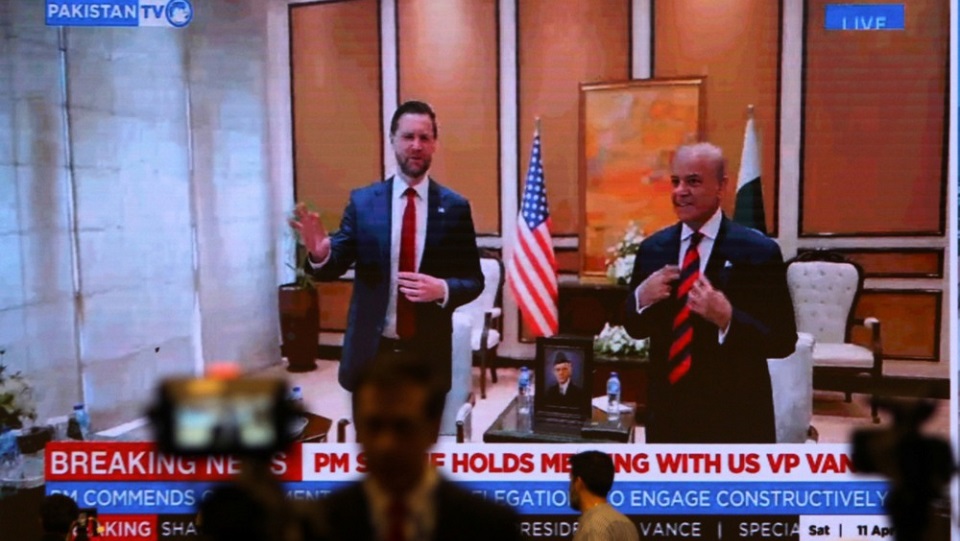
Saturday, April 11. While negotiations between the United States and Iran are ongoing in Islamabad with Pakistan's mediation, Reuters, citing Iranian sources, reported that Washington allegedly agreed to unfreeze approximately $6 billion in assets held in banks in Qatar and other countries. The State Department rejected this information.
But the dispute over the figure obscures a more important context: Iran itself voiced the condition. According to the Iranian side, unfreezing is "directly linked to ensuring safe passage through the Strait of Hormuz" — meaning Tehran is offering money in exchange for shipping, rather than simply as a concession in nuclear negotiations.
A Strait Worth More Than $6 Billion
After the start of hostilities, Iran blocked traffic through the Strait of Hormuz. According to S&P Global Market Intelligence data cited by NBC News, on peak days after the ceasefire announcement, only 2–4 vessels passed through the strait instead of the usual 130–160 per day. About 20% of the world's oil and natural gas are transported through the strait.
On April 5, Trump threatened to attack Iranian power plants and bridges if the strait was not opened within two days. The next day, with Pakistan's mediation, a two-week ceasefire was announced — but Iran has already twice halted tanker traffic, citing violations of the agreement by Israel in Lebanon.
What These $6 Billion Actually Are
The total volume of frozen Iranian assets worldwide exceeds $100 billion — funds accumulated over decades due to sanctions in response to the nuclear program, ballistic missile development, and sponsor of terrorism status. The $6 billion figure is less than 6% of the total.
"Whether the US is ready to unfreeze funds, how much exactly, from which countries and on what conditions — remains unknown."
Euronews, April 9, 2025
There is a precedent: in 2023, the Biden administration agreed to transfer $6 billion from South Korea to Qatar as part of a prisoner exchange. Republicans demanded the refreezing of these funds after Hamas's attack on Israel, claiming the deal undermined trust in American commitments.
A Delegation That Says "No" and "Yes" at the Same Time
The American delegation in Islamabad is headed by Vice President JD Vance, special envoy Steve Witkoff, and Jared Kushner. CNN reports that the US proposal of 15 points includes demands that Iran abandon nuclear weapons, hand over highly enriched uranium, limit defense capabilities — and open the Strait of Hormuz. Meanwhile, Trump wrote on social media that "almost all disputed issues have been agreed upon," and the next morning added: "no uranium enrichment."
Iran rejected the previous 45-day plan and put forward its own 10-point proposal — with a demand for a permanent, not temporary settlement.
If $6 billion actually becomes a gesture of good faith to complete negotiations — it is a signal that the US is ready to pay for an open strait before signing any agreement. If not — Tehran has gained a pressure tool: every closed day in the strait costs the global market more than any financial concession.
The negotiations in Islamabad are scheduled for Saturday. The question is simple: will the US agree to fix the opening of the strait as a precondition for unfreezing — or will it take a preemptive step and see if Iran responds in kind?