Bankers in Dubai Stock Up on Food — a Signal for Markets and for Ukraine
Senior financial executives in Dubai are bracing for a prolonged escalation in the Middle East: why this matters for global supply chains, energy, and Ukraine.

By Tetiana Suchkova-Ladik
March 11, 2026 · 2 min read
What happened and why it matters
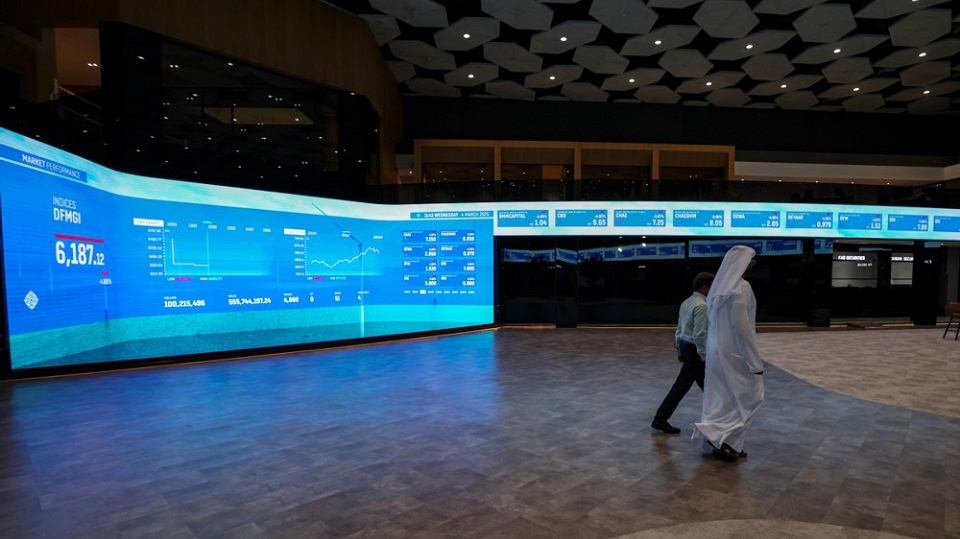
According to The Banker, bank and financial‑sector employees in Dubai have begun stocking up on food and supplies amid fears of further escalation of the conflict in the Middle East. This is not just a casual precaution — such actions indicate growing uncertainty in one of the region’s key financial hubs.
"The situation is extremely worrying"
— Top executive of an international bank, a British citizen (interview for The Banker)
The publication reports that infrastructure sites in the UAE have been targeted — among them Dubai International Airport and the Jebel Ali port. According to the same source, several foreigners were killed, dozens were injured, and debris caused a fire near one hotel.
Despite this, no mass exodus of financial‑sector workers has been recorded so far — however, the number of those going into temporary evacuation is rising, and the cancellation of thousands of flights is complicating departures from the region. One of the publication’s interlocutors has already traveled to Muscat to catch a flight to the United Kingdom.
"The city has gone through many crises since 2009 and has come out stronger each time"
— Financier, comment for The Banker
Experts emphasize that Dubai has a significant infrastructural and legal cushion: in the Long Finance ranking of global financial centres the emirate ranks 11th, ahead of a number of European centres. This gives the city a better chance of withstanding short‑term shocks — but it does not eliminate the risks in the event of prolonged escalation.
"The economic consequences of this war will be closer to the shock of 1973 than to the crisis of 2008"
— Philippe Aghion, Nobel laureate in Economics (comment quoted in The Banker)
What this means for global markets and for Ukraine
Energy and prices. Rising tensions in the region often immediately raise fears about the security of oil and gas supplies, which pushes up prices and affects the fiscal sustainability of importing countries, including Ukraine.
Logistics and supply chains. Ports and air links are critical for rapid delivery of equipment and components. Disruptions or higher insurance premiums for ships and cargo increase logistics costs — this applies to both defence procurements and civilian infrastructure, on which our ability to redeploy resources depends.
Finance and confidence. Panic or mass capital outflows from regional hubs affect exchange rates, lending markets, and the willingness of international partners to sign large contracts. For Ukraine this is another marker: reliable financial channels and alternative logistical routes are becoming more important than ever.
Conclusion
The behaviour of bankers in Dubai is not just a local story about food supplies. It is a mirror of growing uncertainty that can spread to markets, fuel prices and logistical corridors important to Ukraine. We need to monitor economic signals, strengthen diversification of routes and ensure financial resilience for critical supplies. The question remains open: will partners be able to turn declarations of support into concrete mechanisms to protect supply chains while risks are rising?