Bill Ackman Wants to Move Universal Music from Amsterdam to Wall Street for $64 Billion
American billionaire proposes merging UMG with his shell company and relocating listing to New York. Why this is beneficial for Ackman is clear. Why this would benefit Universal is already a question.

By Oleg Bazylewicz
April 8, 2026 · 2 min read
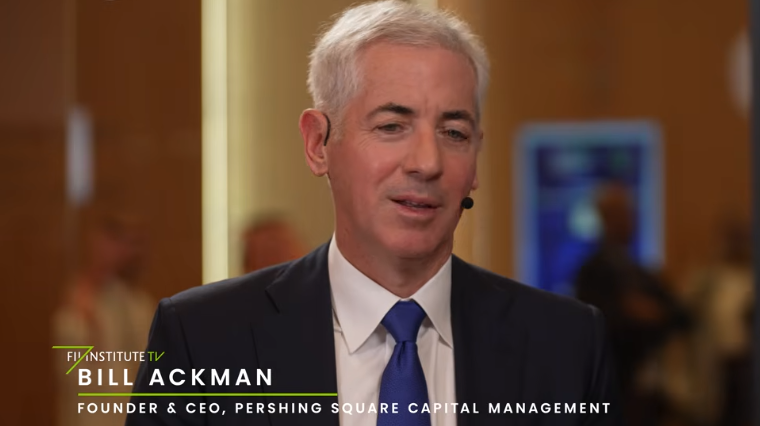
Bill Ackman, founder of the Pershing Square hedge fund, made an official proposal to acquire Universal Music Group — the world's largest music label, which owns catalogs of Taylor Swift, The Beatles, and Drake. The company's valuation in the proposal is $64 billion.
The scheme works as follows: UMG merges with Pershing Square Nasdaq-Listed — a so-called blank check company (SPAC) that Ackman created specifically for deals of this type. After the merger, Universal will transfer its shares from the Amsterdam Stock Exchange to the New York Stock Exchange — Nasdaq.
Why Ackman Wants This
Ackman has long been publicly passionate about the music business. Back in 2021, his fund attempted to invest in UMG before its IPO, but the deal fell through due to regulatory restrictions. Now he is returning with a different instrument.
A move to the American market gives Universal access to a much wider base of institutional investors and higher valuation multiples — American technology and media companies traditionally trade at higher valuations than their European counterparts. For Ackman, this is a classic strategy: buy an undervalued asset, repackage it in an American context, and profit from the revaluation.
Where the Friction Is
Universal currently trades on Euronext Amsterdam, and among its major shareholders are French Vivendi and Chinese Tencent. Neither has publicly supported the idea of relocation. Dutch regulators are also not eager to let such a company go without a fight — such listing migrations in the EU have become an increasingly sensitive issue after several major companies moved to American platforms.
Another consideration is the deal structure through a SPAC. Following the high-profile failures of SPAC mergers in 2021–2022, American investors view this instrument with notable skepticism. Ackman, however, positions his structure as an atypical SPAC with a long-term horizon — but the label remains.
What's Next
The proposal is still informal — negotiations at the board level have not been confirmed. UMG has not officially commented on the terms.
The question is not whether Universal will agree to the move. The question is whether Vivendi and Tencent will agree — and at what price they are willing to sell their influence over a company that controls one-third of the global music market.