House in a cottage cooperative, 5 years conditionally and 13 million — the price of the deal between a former Odesa regional council deputy and the anti-corruption prosecutor's office
# VACS Confirms Verdict for Illegal Enrichment: Former Deputy Avoids Prison in Exchange for Returning 11 Million Hryvnias to Budget and 2 Million to Army The Specialized Anti-Corruption Court has approved a sentence for a former lawmaker convicted of illegal enrichment. The defendant avoided actual imprisonment in exchange for returning 11 million hryvnias to the state budget and an additional 2 million hryvnias to the military. The key question remains whether there is an enforcement mechanism in place if the funds are not transferred.

By Tetiana Suchkova-Ladik
April 9, 2026 · 2 min read
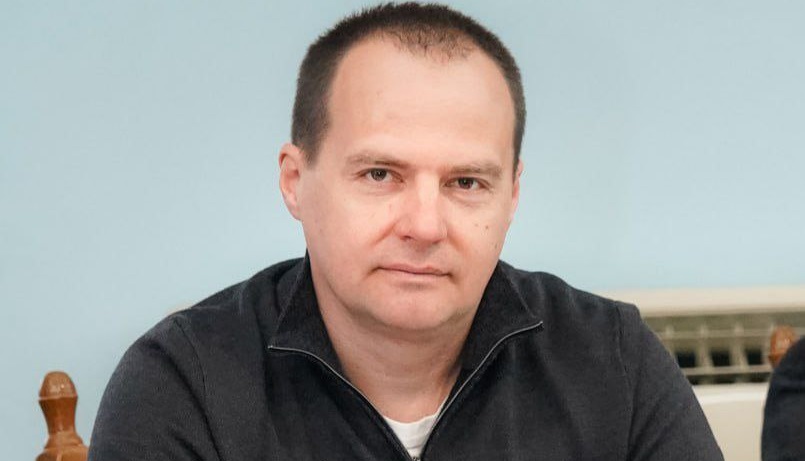
On April 9, 2026, the Supreme Anti-Corruption Court approved a guilty plea agreement between a prosecutor from the Specialized Anti-Corruption Prosecution Office and a former deputy of the Odesa Regional Council. The agreement was initiated by the accused themselves — even before they were officially notified of suspicion.
What the deputy bought and how much it cost the state
According to the SAP, in 2023–2024, the ex-deputy purchased a residential house and farm buildings in a dacha cooperative in the Odesa region. The value of this property exceeds his declared legitimate income by 11,021,837 hryvnias — this is the amount the court determined as the subject of the offense under Part 1 of Article 368-5 of the Criminal Code of Ukraine (illegal enrichment).
«The value of these assets exceeds the regional council deputy's legitimate income by 11,021,837 hryvnias».
— Specialized Anti-Corruption Prosecution Office
Sentence: 5 years, but not in prison
The court imposed a sentence of 5 years of imprisonment with deprivation of the right to hold positions in local government and state bodies for 2 years. However, under Article 75 of the Criminal Code of Ukraine, the defendant was exempted from serving actual imprisonment — with a probation period.
This is a standard model for guilty plea agreements in anti-corruption cases: the Supreme Anti-Corruption Court has applied it both in the Kormyshkina case in March 2025 and previously. Actual imprisonment is the exception, not the rule.
What the convicted person must do — and where the agreement is weak
The agreement terms provide for two financial obligations:
- 11 million hryvnias — transfer to the State Budget of Ukraine (equivalent to the value of illegally acquired property);
- 2 million hryvnias — to support the Armed Forces of Ukraine through the "Come Back Alive" foundation.
In total — 13 million hryvnias, which gave the headline to the SAP announcement. However, the agreement fixes the obligation to transfer funds, not the fact of their receipt by the budget. The verdict becomes final in 30 days if not appealed to the Appellate Panel of the Supreme Anti-Corruption Court.
In previous similar cases — including the case of a former deputy of the Ternopil Regional Council in 2024 — the defendants transferred part of the funds to the Armed Forces before the agreement was approved as proof of serious intent. In this case, the SAP does not mention such transfers.
Why this is not just one case
A regional council deputy is not the highest level of the corruption hierarchy, but it is at the regional level that decisions are made about which lands go for development, which tenders are won by "correct" companies, and where dacha cooperatives are built. The purchase of real estate in such a cooperative in 2023–2024 — that is, during a full-scale war — particularly emphasizes the context.
If the convicted person does not transfer 13 million hryvnias within the specified period, the issue of forced collection goes to enforcement proceedings — a mechanism whose effectiveness in Ukraine still raises questions even in cases where there is a verdict.