CIC resumes talks with Blackstone and TPG — what it means for global capital flows and Ukraine
China's sovereign wealth fund, with $1.57 trillion in assets, is once again in contact with leading U.S. investment firms. We examine why this matters for markets, geopolitics, and Ukrainian investors.

By Tetiana Suchkova-Ladik
March 24, 2026 · 2 min read
In Brief
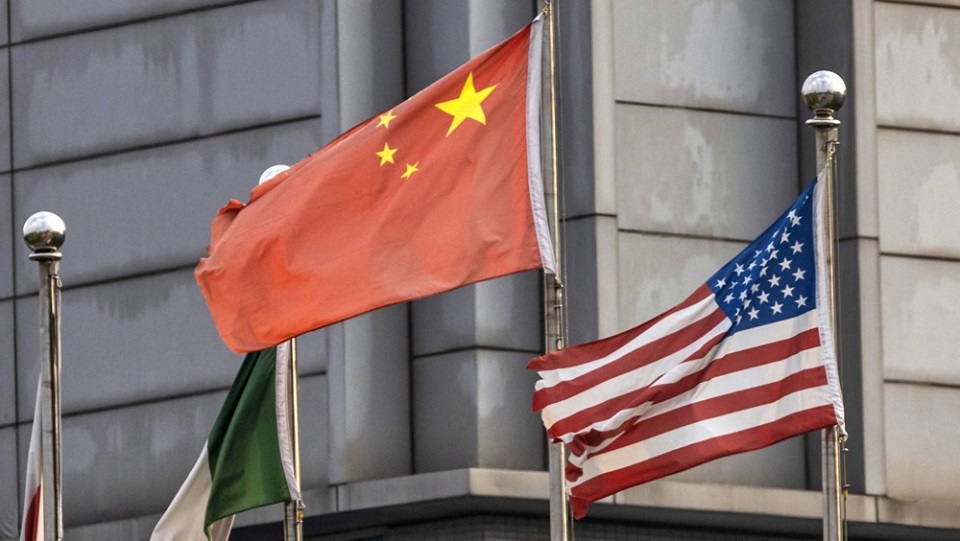
China Investment Corp. (CIC) — one of the world's largest sovereign wealth funds with about $1.57 trillion in assets — has held talks with American investment firms Blackstone and TPG, Bloomberg reports citing people familiar with the matter. No deals have been signed yet; it is also unclear whether any potential investments would flow directly into the U.S. economy.
What is known and why this is more than just deals
Earlier, CIC reduced assets by roughly $1 billion amid overall tensions between the U.S. and China, including selling parts of its investments in funds managed by Carlyle and other major players. The new contacts come against a backdrop of some thawing in relations between the countries, but talks were temporarily halted after U.S. strikes on Iran — an example of how military-political events instantly affect capital.
"Talks are taking place amid a certain thaw in relations between the countries, but geopolitics remains a key factor of uncertainty."
— Bloomberg (citing sources)
Why this matters for markets
Sovereign wealth funds increasingly act not only as investors but also as geopolitical signalers. When a large Chinese fund returns to talks with U.S. private equity, it is simultaneously a signal of possible easing and of capital's willingness to seek returns even in more challenging times. For American investment firms, it is an opportunity to replenish their capital pools amid fundraising difficulties caused by high interest rates and low private equity returns.
What this means for Ukraine
The indirect effects of such decisions are important for us. First, the restoration of global capital flows increases overall market liquidity and may ease access to financing for cross-border funds that invest in Ukraine or Ukrainian assets. Second, sovereign fund activity changes the rules of the game: investment by a large player can contribute to consolidation of the private capital market and to increased confidence — factors that work in favor of Ukrainian startups and funds.
Example from the domestic market: Diligent Capital Partners (DCP) — a Ukrainian private investment fund that invested €20 million in Preply. In January 2026 Preply became a "unicorn" with a valuation of about $1 billion. This shows that Ukrainian funds and projects can convert limited capital into global success if the capital market becomes more accessible.
"Sovereign fund investments are increasingly used as an indicator of political and economic rapprochement between countries."
— analysts interviewed by Bloomberg
Conclusion
CIC's return to talks is not an instantaneous breakthrough, but it is an important indicator: capital is willing to test the restoration of ties even amid geopolitical tension. For Ukraine this is an opportunity — but not an automatic guarantee — to benefit from strengthened cross-border flows, increased trust in funds, and examples of successful local investments. The next step is up to markets and policymakers: turn conversations into concrete cooperation mechanisms and transparent investment channels that will bolster our country's economic resilience.