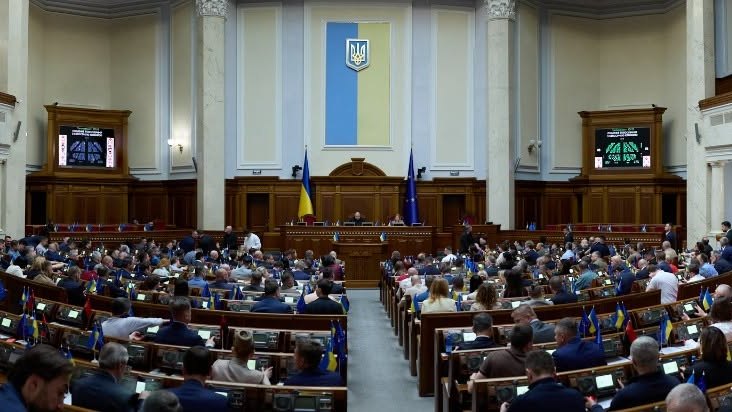
Lifetime Status Retained. Daily Checks Eliminated: What Parliament Changed for Former Officials
The Verkhovna Rada did not revoke the indefinite status of PEP, but made it less painful: banks are now required to conduct enhanced due diligence only for one year after dismissal, then only based on actual risk.

By Tetiana Suchkova-Ladik
June 10, 2026 · 2 min read

A former deputy minister who resigned five years ago is no longer required to justify every payment to the bank. The Verkhovna Rada has established: enhanced financial monitoring of PEPs applies only for 12 months from the date of dismissal — everything beyond that requires separate justification.
How it worked and what changed
Before 2020, the law gave banks three years to pay enhanced attention to former government officials. Then the "anti-laundering" law 361-IX was passed — and PEP status became lifetime: any transaction by any former official formally required enhanced scrutiny until the end of life. In November 2022, the Rada attempted to soften the norm to three years, but a year later returned to lifetime monitoring — under pressure from the IMF.
The new amendment, adopted as part of the law on taxation of digital platforms (№15111-Д), does not eliminate lifetime status. As LB.ua explains, it only changes enforcement rules: the first 12 months — automatic enhanced regime (clarification of sources of funds, management approval of transactions, enhanced monitoring). After that, the bank may continue enhanced control, but is obligated to document specific, individually assessed risk. The former PEP status alone is no longer sufficient grounds.
"If a person comes to a bank and wants to deposit $400,000, whose origin they cannot explain — of course, there will be questions and checks"
Forbes Ukraine, banking sector representative
Why this compromise is significant
Lifetime PEP status is not a Ukrainian invention, but a FATF requirement and one of the conditions Ukraine undertook to open negotiations on EU accession. The previous attempt to weaken the norm in 2020 provoked a reaction from the European Commission and FATF. This year, parliament again proposed to abolish lifetime status altogether — the European Commission again warned of risks for European integration. Ultimately, a middle path was chosen: status remains indefinite, but automatic verification is limited in time.
The amendment also obliges banks to notify the PEP client in writing if they decide to continue the enhanced regime after 12 months. This is new protection against situations where a person cannot open an account or conduct a transaction for years without explanations — not because there is a risk, but because there is a line in the database.
Three times in five years
The chronology of changes itself is indicative:
- before 2020 — three years of enhanced monitoring after dismissal;
- 2020 — lifetime PEP status (FATF and EU requirement);
- November 2022 — Rada shortens to three years;
- October 2023 — return of lifetime status under IMF pressure;
- June 2025 — current amendment: status is lifetime, but mandatory enhanced monitoring — only 12 months.
Each rollback and each return coincided either with the next IMF tranche or with a step in European integration. This is no coincidence — it illustrates that internal consensus on PEPs in the Ukrainian parliament has not been reached.
The question remains open: if the European Commission silently accepts this amendment — the norm will be consolidated. If not — the Rada may face a new ultimatum already in the context of a specific negotiating section on rule of law.