France adds €71m to Ukraine's reconstruction grant fund — how it will affect infrastructure and business
Paris is investing in reconstruction projects with a focus on long-term partnerships and technology transfer. We analyze who stands to gain, what the terms are, and what to expect in practice.

By Tetiana Suchkova-Ladik
February 20, 2026 · 2 min read
France tops up the fund: what was announced
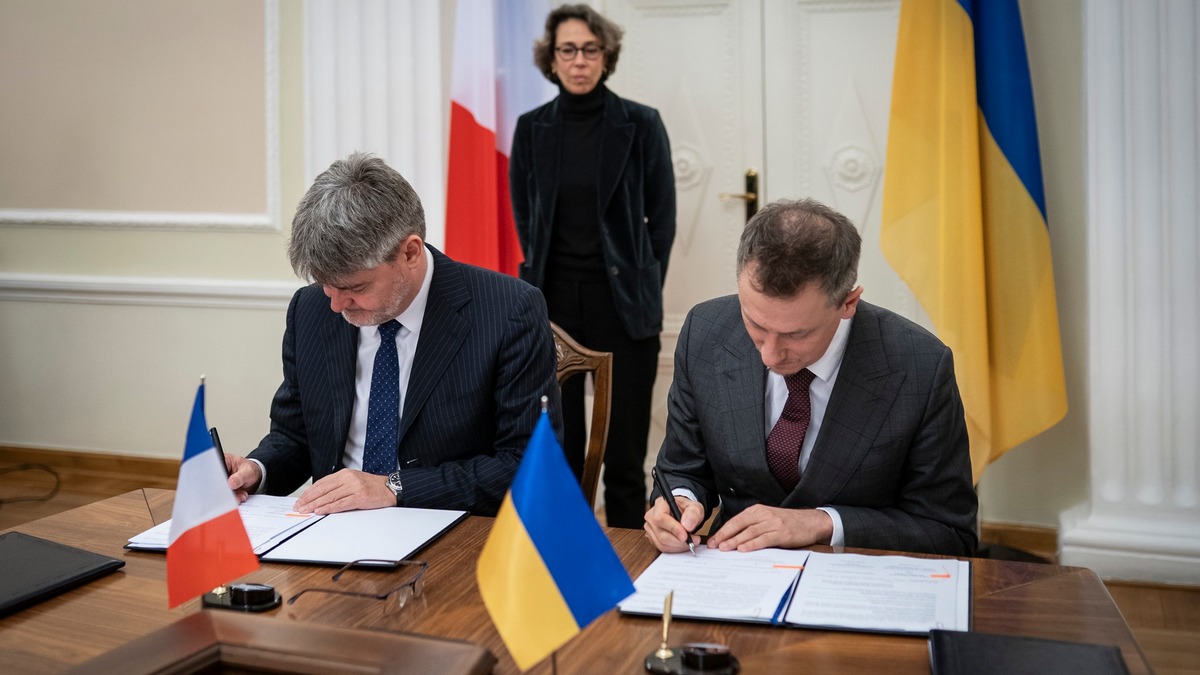
The Ministry of Economy, Environment and Agriculture of Ukraine announced on 20 February that France has added €71 million to the grant fund for Ukraine created in 2024. According to official information, these funds are intended to encourage the participation of French companies in the reconstruction of Ukrainian infrastructure and the development of local business.
"These funds will be able to attract French companies that are interested in long-term partnerships with Ukrainian businesses, the transfer of technologies and the creation of additional value within our country"
— Oleksii Sobolev, Minister of Economy, Environment and Agriculture of Ukraine
Why this matters
This is not just money — it is a signal of trust and a desire to build sustained cooperation rather than one-off aid. For Ukrainian enterprises it is a chance to obtain investment, technologies and access to European supply chains. For regions, it is an opportunity to accelerate the restoration of critical infrastructure and to create jobs.
Terms and priorities of the fund
Key requirements announced:
- the call for new projects will run until 9 April — open to French companies, with priority for small and medium-sized enterprises;
- the maximum support amount is now lower — up to €7 million (including insurance);
- project implementation period — up to 16 months;
- minimum French share — 50%;
- projects must meet environmental and social standards.
Sectoral priorities cover health care, transport, energy, agriculture, water supply and sanitation, waste management, humanitarian demining, housing construction and digitalization. Implementation is expected to take place in 2027.
Context: not an isolated initiative
In March 2025 the French fund already selected its first 19 projects worth €200 million in the fields of energy, health care, water and digital solutions. In addition, on 17 February four countries — Ukraine, Sweden, Lithuania and Canada — signed an agreement to create the Ukraine Transport Support Fund (UTSF) to finance small and medium projects in transport infrastructure.
Experts agree that such instruments signal continued Western support and are a way to direct investment into practical, quickly implementable solutions. At the same time, there is a risk of delays due to document preparation and partner coordination.
What’s next
This is a chance for Ukrainian companies to lay the groundwork for partnerships and to prepare engineering and project solutions under the fund’s new requirements. But the more important test is whether the budgets and selections will turn into signed contracts and on-the-ground projects. So far the signal is positive, but the focus now is on implementation and monitoring compliance with standards.
Question for partners: will Ukrainian regions be able to quickly convert these opportunities into concrete works and jobs, and how effectively will local companies be engaged?