Cabinet Approves Draft Labour Code: Why It Will Change Jobs, Wages and the Path to the EU
The new Labour Code replaces rules from 1971 — it formalizes remote and flexible employment, introduces a transparent minimum wage mechanism, and is expected to accelerate the reduction of the informal economy. We break down what will actually change for workers, businesses and the state already this year.

By Tetiana Suchkova-Ladik
January 7, 2026 · 3 min read
Cabinet decision — in two sentences
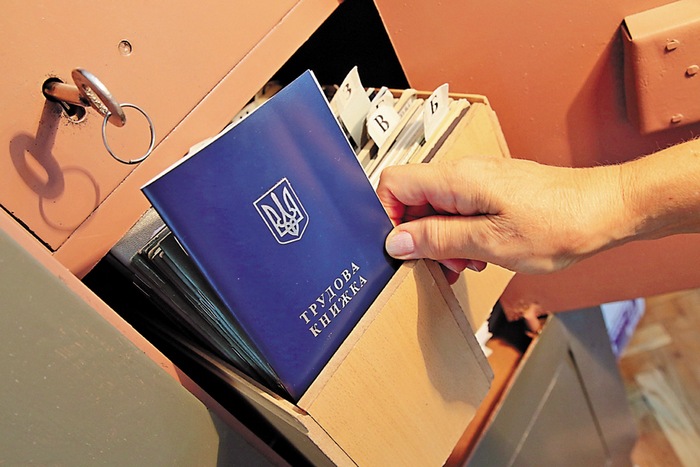
On January 7 the Cabinet of Ministers adopted a draft of the new Labor Code, on which the Ministry of Economy had worked for more than two years in partnership with business, trade unions, researchers and international partners. The document is designed to update labor rules that still largely rely on the 1971 Code and to prepare the labor market for modern forms of employment.
"The document is one of the key steps in implementing the Employment Strategy until 2030. We aim to make the labor market more inclusive and bring into economic activity people who today are often left out of the market: women, youth, veterans, people with disabilities,",
— Yulia Svyrydenko, Prime Minister of Ukraine
Why this matters now
The labor market has changed — remote work, part-time positions and hybrid formats have emerged. Rules written for an industrial economy no longer reflected reality. Updating the code has three practical implications for citizens:
- legal certainty — fewer gray areas in employee status;
- reduction of the shadow economy — the Ministry of Economy previously estimated the potential to bring around UAH 43 billion per year out of the shadows;
- European integration — the document foresees implementation of more than 30 EU directives and ILO conventions, which simplifies alignment with the European labor market.
Seven key changes (briefly)
- Eight indicators of employment relationships. This provides clear criteria for distinguishing workers under an employment contract from independent contractors — reducing legal uncertainty.
- More contract types — from six to nine. Remote work, work from home and non-fixed working hours are officially codified; it will be possible to have multiple contracts with the same employer.
- Electronic documents equated with paper ones. This simplifies formalizing relationships, especially for mobile and seasonal workers.
- Transparent mechanism for the minimum wage. The minimum wage will have monthly and hourly forms; its level will be set by the government as a percentage of the average wage — this brings practice closer to EU standards.
- Flexible forms of work and parental rights. The Code expands opportunities to combine work and childcare: both mother and father will be able to take a two-month leave for caregiving.
- Labor inspection reform. A risk-oriented approach to inspections is introduced, reducing pressure on law-abiding businesses and concentrating resources on actual violations.
- Mechanisms for young people. A separate student employment contract allows safely combining education and a first job.
Context and details worth knowing
The draft code is not a final act but a legal framework. Next, the document goes to the Verkhovna Rada for consideration in the first reading. Implementing the provisions will require subordinate acts, methodologies for calculating the minimum wage and inspection procedures. The speed and smoothness with which the changes take effect in practice will depend on the quality of this technical work.
Additionally: the adoption of the code is backed by recent steps in labor policy — in April 2024 the Rada legalized employment of domestic workers, and the president signed the corresponding law. This signals a consistent policy of regulating employment.
What's next — outlook
The draft creates the potential for long-term positive effects: bringing earnings out of the shadow economy, better access to social guarantees and increased labor mobility. But there are risks too — political debates in parliament, the need for prompt technical solutions and possible resistance from those who benefit from the current informal employment.
Brief advice for readers: if you are an employee — monitor pay details and contract forms; if you are a business — prepare internal policies on remote and flexible work; if you are authorities — quickly put mechanisms in place so the law does not remain a declaration.
Conclusion. The new Labor Code is a pragmatic step toward a modern economy and European integration. Now it is up to the parliament and technical implementation: declarations must turn into concrete rules and services that millions of Ukrainians will feel.