Cashback and "winter thousand": who actually receives money intended for the poor
Analysts calculated that minimal verification of the financial status of social benefit recipients could free up billions of hryvnias. However, the government continues to distribute money to everyone without discrimination.

By Tetiana Suchkova-Ladik
May 6, 2026 · 2 min read
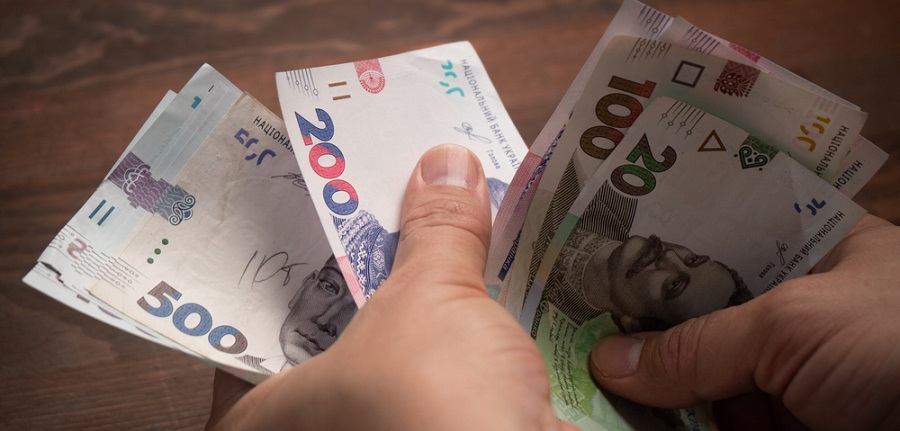
The programs "eSupport," cashback for Ukrainian goods, and the "winter thousand" have one thing in common: money is received by both those who genuinely need it and those who could live without state support. Analysts from several economic institutions have concluded that the lack of targeted assistance is not a technical oversight, but a systemic problem that costs the budget billions.
Verification exists. But it's minimal
To receive a payment, it is enough to have the "Diia" application and meet formal criteria — for example, be an internally displaced person or simply a citizen during a certain period. Verification of actual financial status — real estate, deposits, income from abroad — either does not happen at all, or happens with significant delays.
The result is predictable: some payments end up with people whose financial situation does not indicate a need for state support. How much exactly — there are no accurate figures, because there is no proper audit.
How much does this cost
Analysts do not name a single loss figure — methodologies differ. But the general conclusion is the same: even basic cross-checking of registries (tax, property, banking) would reduce spending by hundreds of millions, and in some programs — by billions of hryvnias per year.
For comparison: the annual budget of the medical guarantees program is approximately 130 billion hryvnias. Money that goes to the "wrong place" is not abstract — it is concrete medicine, doctors' salaries, or payments to those who have truly lost their homes.
Why this happens
There are several explanations, and all are real. First, political logic: universal payments are easier to communicate and do not cause social resistance. Second, technical: registries in Ukraine are still poorly integrated with each other, and data about citizens' property abroad is practically inaccessible. Third, military context: in 2022–2023, the speed of program deployment was more important than accuracy.
But now — 2025. And speed as an excuse no longer sounds convincing.
What analysts propose
The recipe is not revolutionary: implement cross-checking of data between registries before payment, not after. Establish property thresholds — for example, exclude from programs people with declared real estate above a certain value or deposits above a certain amount. Make verification results public, at least in aggregate form.
None of these measures are technically difficult. Politically — that's another matter.
Real conflict
The problem is not that officials do not know about the lack of targeted assistance. The problem is that narrowing the circle of payment recipients always means someone's losses and someone's dissatisfaction. In wartime, when public support is critically important, the government chooses not to irritate unnecessarily.
But this logic has a price. Every hryvnia that went to the wrong place is a hryvnia that someone else lacked.
The question is not whether it is technically possible to implement targeted assistance — it is. The question is whether the government is ready to do this before international partners start making verification of social spending a condition for further financing.