North Korea may have earned up to $14.4 billion from Russia’s war against Ukraine — what it means for security
A report from the Institute for National Security Strategy and satellite imagery indicate that Pyongyang is selling troops and armaments to Moscow. This undermines the effectiveness of sanctions and has direct consequences for the frontline and for international politics.

By Tetiana Suchkova-Ladik
March 16, 2026 · 2 min read
What the report claims
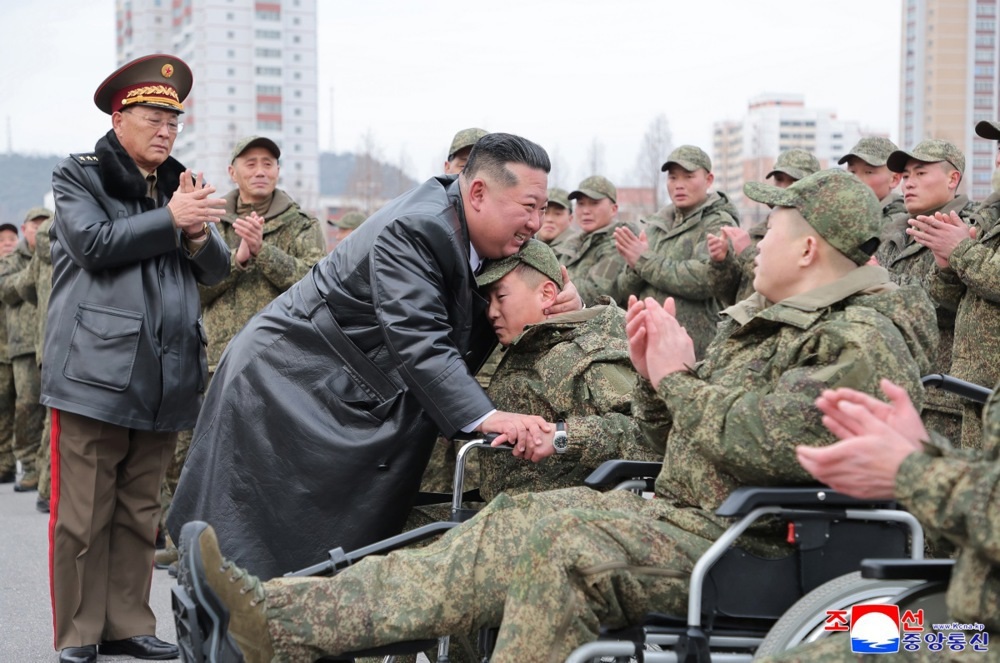
According to South Korean news agency Yonhap and a study by the Institute for National Security Strategy, North Korea may have received between $7.67 billion and $14.4 billion in hard currency from August 2023 to December 2025 for supplying arms and deploying its troops to support Russia’s efforts in Ukraine.
The report specifically states that Pyongyang sent contingents four times since October 2024, totaling more than 20,000 soldiers. Direct revenues from troop deployments are estimated at roughly $620 million, while the potential annual inflow from such deployments — if the practice continues — is about $560 million.
"If North Korea receives full payment for sending troops and exporting weapons, the key economic effect of sanctions — the reduction of hard-currency revenues — will be undermined."
— Institute for National Security Strategy
The authors emphasize that the estimates are based on open-source materials and satellite imagery; at the same time, experts warn that in practice Pyongyang may have received only a portion of the projected sums — between 4% and 19.6%.
Why this matters for Ukraine
This information has three key implications for our security and international policy:
- Undermining sanctions pressure. If Moscow is purchasing troops and technology for hard currency, the impact of international restrictions is reduced — budgets and supply chains find alternative funding sources.
- Escalation on the battlefield. Additional personnel and materiel for Russia could increase pressure on specific frontlines, altering the operational balance.
- Regulatory risk for partners. Numerous transactions and "gray" supply channels create a risk of evading export and financial controls, requiring allies to strengthen monitoring.
Implications and scenarios
The analysis outlines main scenarios that are relevant for decision-making:
- Worst: Moscow establishes stable payment channels and Pyongyang supplies arms and personnel at scale — sanctions pressure is significantly reduced.
- Moderate: Pyongyang receives a fragment of payments and supplies vulnerable components; some deliveries are exposed via satellite and intelligence — partners partially close the routes.
- Best: the international community swiftly closes loopholes, tightens control over trade flows, and increases accountability for intermediaries — pressure on Russia is restored.
What partners can and should do
The expert community points to several practical steps: strengthen financial controls and sanction mechanisms, expand monitoring of maritime and air supply routes, and promptly publish the evidentiary base for diplomatic pressure. For Ukraine, it is important to ensure that partners’ declarations turn into concrete actions rather than remaining rhetorical.
Brief conclusion
Data about billion-dollar inflows to Pyongyang are not just statistics: they signal that economic support for Russia may come from unexpected sources and undermine the effectiveness of sanctions. The ball is now in the partners’ court — from rapid intelligence support to clear sanction responses. The question is not only whether we document the facts, but how quickly and coherently we respond to them.