Every third hryvnia from the 2026 state budget goes to the war effort even before summer
Over four months, Ukraine spent 1.35 trillion hryvnias — 13.8% more than last year. More than 63% of these funds were consumed by defense, and the pace of spending already signals pressure on the annual budget.

By Tetiana Suchkova-Ladik
May 19, 2026 · 2 min read
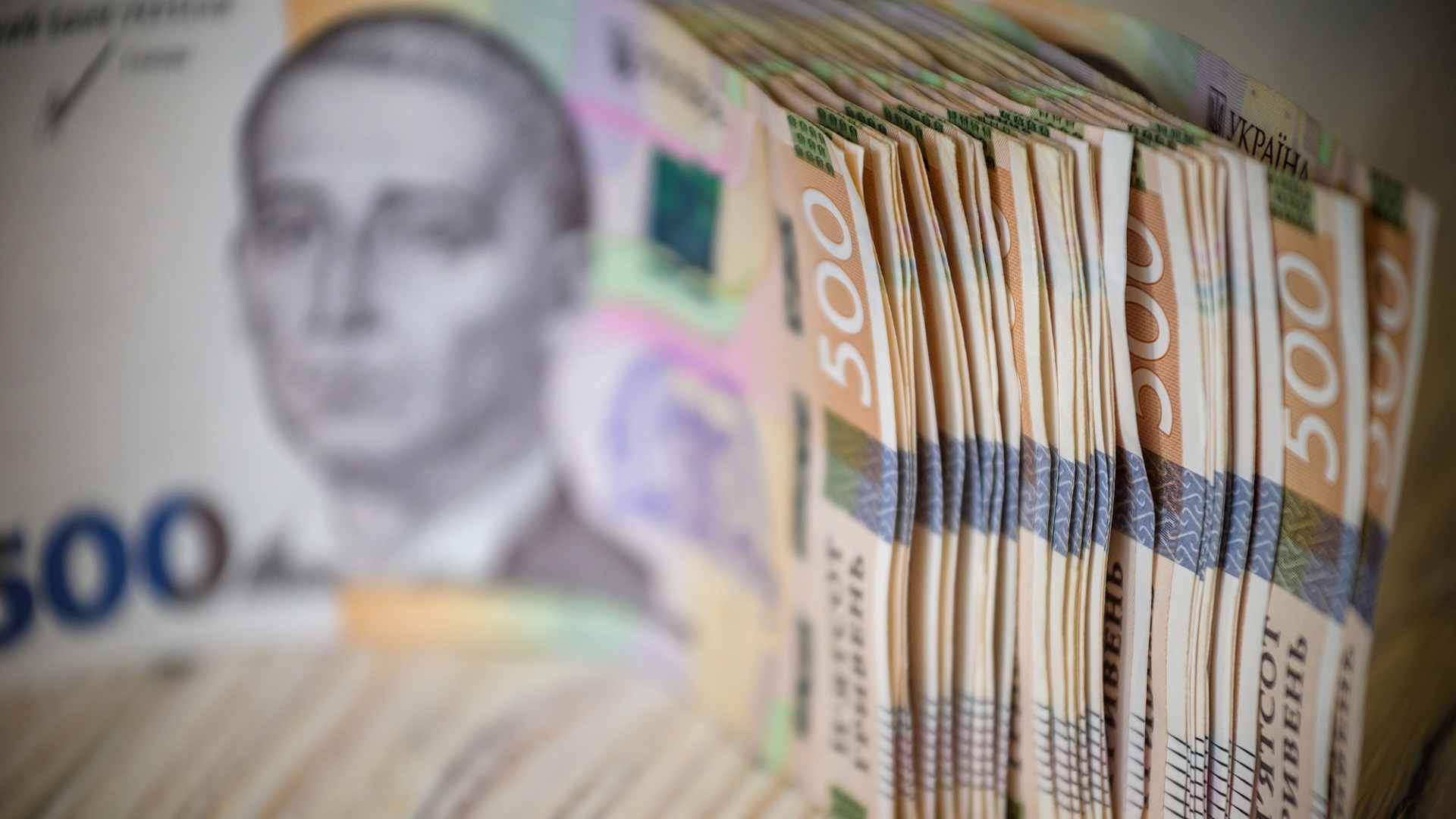
From January to April 2026, the Ministry of Finance recorded cash expenditures of the general fund of the state budget at the level of 1.35 trillion hryvnia — 163.6 billion hryvnia, or 13.8% more than in the same period last year. April alone became a record month: 433.1 billion hryvnia in expenditures against 302.6 billion hryvnia in revenues — a gap of more than 130 billion for a single month.
Where the money goes
Of all funds spent over four months, 854.1 billion hryvnia — 63.3% — went to security and defense. For comparison: the entire annual defense and security budget is approved at 2.807 trillion hryvnia, meaning that in the first third of the year, approximately 30% of the defense limit has already been spent. This means either the pace will slow down or the budget will have to be revised — as has already happened three times in 2025.
The remaining expenditures are distributed among social protection, education, and debt servicing — but their share is shrinking with each month of war.
A structural problem that the figures cannot hide
Analysts at the Center for Eastern Studies (OSW) warned when the budget was adopted: expenditures for maintaining the army were underestimated by 195 billion hryvnia compared to the real needs that emerged in 2025, when monthly personnel costs increased from approximately 110 to over 150 billion hryvnia. The April 2026 dynamics confirm: the budget is again being exhausted faster than planned.
«The 2026 budget is the fifth one we adopt under conditions of full-scale war. The country is directing all available resources to the main thing — defense and military capability».
— Finance Minister Sergiy Marchenko, December 2025
At the same time, a member of the NBU Council, economist Vasyl Furman, assesses the budget as realistic for implementation — but with a significant caveat: a deficit of 18.4–18.5% of GDP makes Ukraine critically dependent on external support, which the government expects at the level of $45–46 billion from the IMF, the EU, the World Bank, and G7 countries.
What this means for people
Every hryvnia of budget deficit is either external debt that will have to be repaid after the war, or domestic borrowing that puts pressure on inflation. If the April gap between revenues (302.6 billion) and expenditures (433.1 billion) persists in May-June, by the end of the first half of the year the deficit could exceed 400 billion hryvnia — a sum roughly equal to four annual budgets of the Ministry of Health.
This is not a catastrophe — as long as external financing continues to arrive. But that is precisely where the fragility lies: if the next tranche from the EU or G7 is delayed, there will be nothing to cover the cash gap.
If the pace of defense expenditures does not slow down in the second quarter, the Council will receive a draft budget revision proposal by autumn — the only question is whether external financing will be confirmed by that time to support new commitments.