"Bought a Machine – No Machine, But the Debt Remains: EBRD Tests a Mechanism Ukraine Has Never Had"
# First in EBRD Practice: Bank Partially Writes Off Credit If Asset Destroyed by War For the first time, the European Bank for Reconstruction and Development is partially forgiving loans when assets have been destroyed by the war. The program currently applies to clients of PrivatBank and Raiffeisen Bank, and only covers capital investments.

By Tetiana Suchkova-Ladik
May 11, 2026 · 3 min read
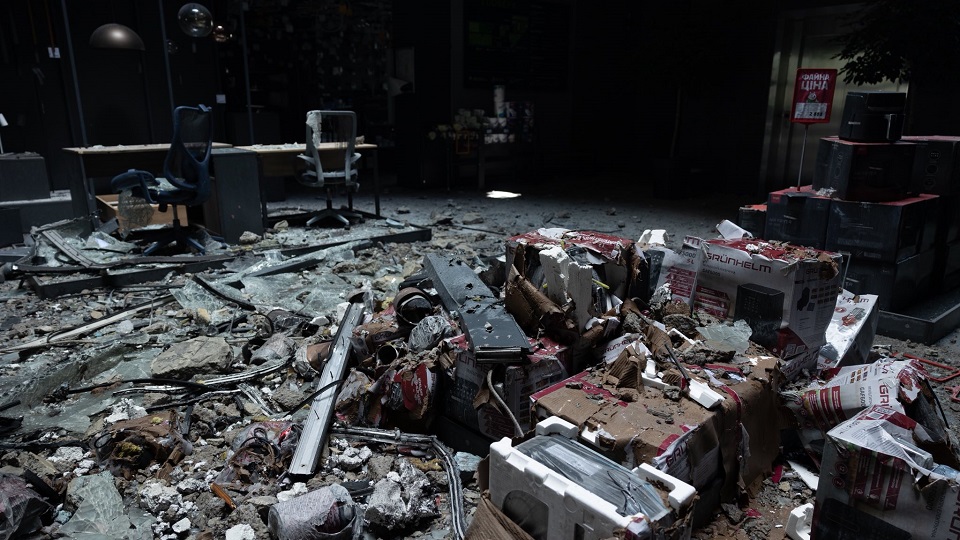
An entrepreneur bought equipment on credit, then came a strike — and the machine is gone, but the debt remains. This situation, which has become typical for thousands of Ukrainian businesses, is what a new mechanism from the European Bank for Reconstruction and Development is trying to solve.
What was launched and how it works
The EBRD, together with PrivatBank and Raiffeisen Bank, is launching a pilot mechanism Enterprise Security Enhancement (ESE) — the first such instrument in the bank's history. The total financing volume is 8 million euros: 6.8 million for PrivatBank and 1.2 million for Raiffeisen Bank. The funds come from the EBRD's Shareholder Special Fund.
The logic is simple: if a borrower took out a loan to purchase fixed assets — equipment, machinery, buildings — and these assets were directly damaged or destroyed as a result of military operations, the bank can partially write off the remaining debt. The EBRD and donors compensate the bank for the respective losses.
According to the EBRD, Ukrainian companies currently remain legally responsible for loans even when the financed assets have already been destroyed, and war risk insurance for businesses remains extremely limited.
Who can apply — and what not to expect
The ESE mechanism applies exclusively to loans for capital investments. Loans for working capital, that is, for current business expenses, are not covered by the program. Minimum damage thresholds and compensation limits at the level of individual projects are also provided — so that the instrument does not become a way to solve any financial problem.
Each application will go through verification: the partner bank will verify it together with the EBRD or engaged independent consultants before any compensation payment is made.
«This mechanism is very important for Ukrainian business, as it will allow continued operations and reinvestment of funds. Unfortunately, due to the full-scale war, entrepreneurs work in conditions where their property can be destroyed at any moment».
Mikael Bjornert, Chairman of PrivatBank
According to Bjornert, in 2025, 40% of loan applications at PrivatBank were for investment purposes — a signal that business continues to invest even under shelling.
The scale of the problem that 8 million euros won't solve
According to the NBU, as of early 2025, the total volume of non-performing loans of enterprises in Ukraine's banking system was 347 billion hryvnia — almost 39% of the entire corporate loan portfolio. Part of these debts is directly related to destroyed or occupied assets.
Against this backdrop, 8 million euros is essentially a pilot to test the model, not a large-scale solution to the problem. The EBRD explicitly states: after the testing phase, financing is planned to be attracted from external donors, including the European Commission within the framework of the Ukraine Investment Framework — part of the EU aid package worth 50 billion euros. Later, the mechanism is planned to be expanded to other Ukrainian partner banks of the EBRD.
What this means practically
- Clients of PrivatBank and Raiffeisen Bank with loans for equipment or real estate damaged by the war can apply for partial debt forgiveness.
- The specific percentage of write-off is not fixed in advance — it depends on the verified amount of losses and project limits.
- Clients of other banks are currently outside the mechanism, but the EBRD declares expansion after the pilot.
- Households who took mortgages on property destroyed in the combat zone also potentially fall under the mechanism.
The key question of the pilot is not the amount of money, but whether the verification model will work in active war conditions: how to confirm the fact and degree of damage, who is responsible for the assessment, and how accessible the procedure will be for small businesses, not just for large borrowers with resources for paperwork. If the pilot shows an acceptable level of abuse and operational manageability — the mechanism could become a template for a large-scale recovery program. If not, the Ukraine Investment Framework will have another unrealized line in its list of intentions.



