NAV used video with forged subtitles against Oschadbank bailiffs — bank published refutation
Hungary's tax authority claimed that the recording contained conversations about "corrupt payments" — in reality, people were laughing about the conditions they had to work in while processing documents. The case is unfolding a month before Orbán's election.

By Tetiana Suchkova-Ladik
April 8, 2026 · 3 min read
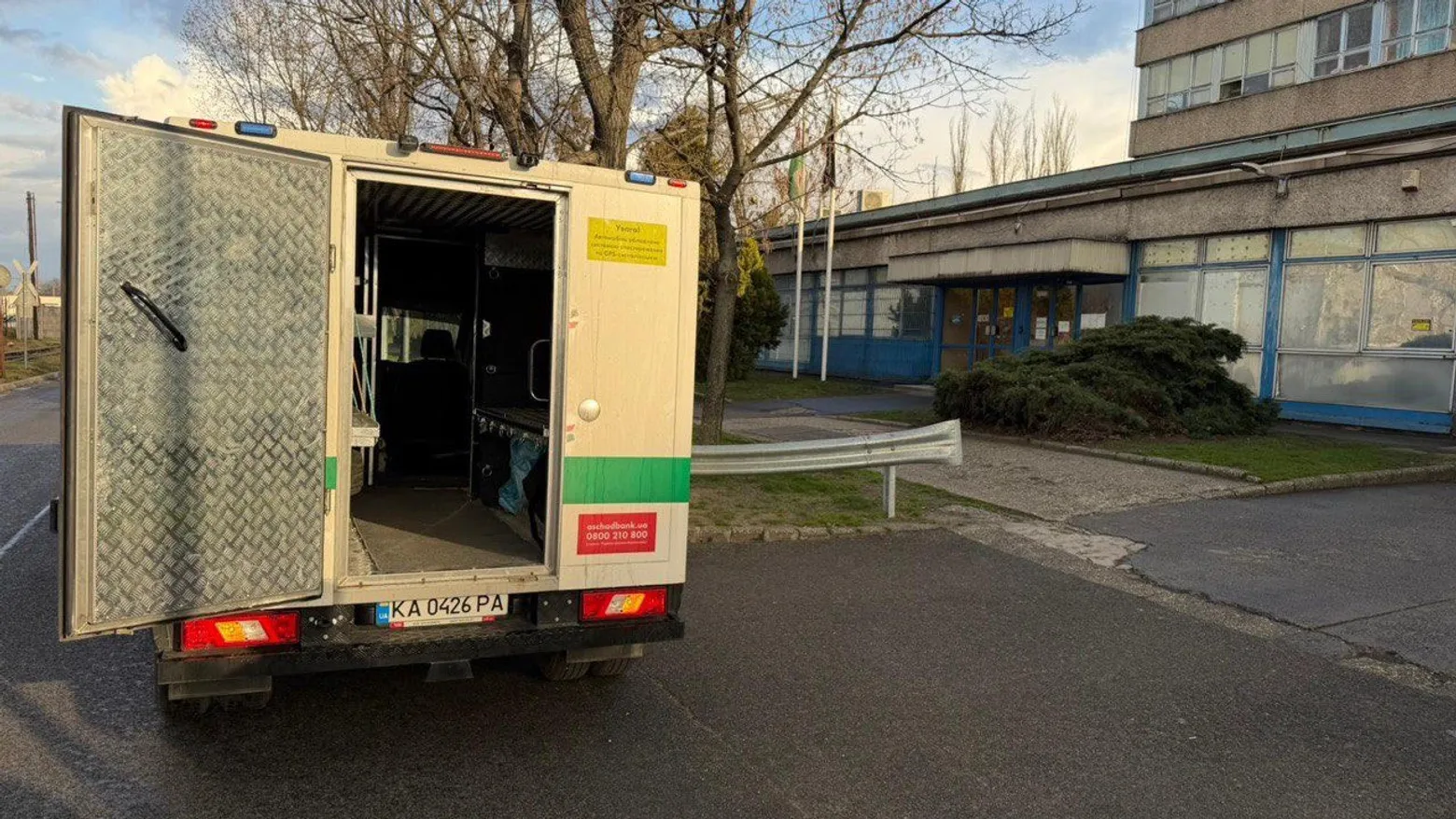
On April 8, Hungary's National Tax and Customs Administration (NAV) published new materials in the case of the detention of Oschadbank couriers — including video footage shot at the same gas station on the M5 highway near Budapest where, on March 5, the Counter-Terrorism Center (TEK) stopped two armored vehicles.
What the video showed — and what was added to it
According to Hungarian government spokesman Zoltan Kovacs, the video shows a former SBU major general who headed the convoy's security filling out documents in a gas station restroom, while his companions "discuss payments related to corruption." Kovacs published this version on X.
Oschadbank's press service confirmed that the video is genuine, but claimed that the Hungarian side fabricated the subtitles. According to the bank's version, the couriers were not discussing any payments — they were laughing about the conditions under which they had to fill out documents in a gas station restroom. NAV has not publicly released the video itself; it is currently impossible to independently verify both subtitle versions.
"Among the evidence is a video allegedly showing a former major general of Ukrainian intelligence falsifying documents in a gas station restroom, while his accomplices discuss payments related to corruption"
— Hungarian government spokesman Zoltan Kovacs, X
Context: what was seized and what is known about the operation
On March 5, 2026, TEK stopped a convoy on the M5 highway. According to NAV, the two armored vehicles contained approximately $40 million, €35 million, and 9 kilograms of bank gold, being transported from the Vienna branch of Raiffeisen Bank International to Oschadbank's headquarters in Kyiv. Law firm Horváth Lawyers, representing the bank and its employees in Hungary, told Euronews that the origin, purpose, and legal title of the funds are confirmed by documentation, and there are no signs of criminal activity.
The Hungarian government adopted Resolution No. 49/2026, allowing NAV to retain the seized assets for at least 60 days. Hungary agreed to return the armored vehicles — with damaged equipment. The money and gold remain under arrest.
Seven couriers were released without charges, but were expelled from the EU with a three-year entry ban. According to The Guardian, during interrogations, one employee — the former SBU officer — was injected with an unknown substance despite his objections. Blood tests revealed traces of a relaxant-class substance; Ukrainian sources characterized the method as "KGB-style."
Who launched the operation and why
According to investigative outlet VSquare and journalist Sabolcs Pani, Hungarian intelligence had been tracking regular Oschadbank flights between Austria and Ukraine since at least early January 2026. The operation was coordinated by state secretary for civilian intelligence oversight Orsh Farkas — a senior advisor to Minister Antal Rogan, who controls the intelligence apparatus and government communications. The initial information about the former SBU officer came from Russian sources, according to Pani.
- A week before the detention, Orban stated that he would "force" Ukraine to resume oil supplies through the damaged Druzhba pipeline.
- In parallel, the government spread the version that the seized funds were intended to finance the opposition Tisza party of Peter Magyar — parliamentary elections are scheduled for April 12.
- On March 26, the government announced its intention to file a criminal complaint against Pani himself, accusing him of spying on behalf of Ukraine.
Ukraine's Foreign Ministry characterized the situation as "state banditry." Oschadbank's representative filed a complaint with Hungary's chief prosecutor's office citing articles on abuse of power and an act of terrorism.
The question that will determine the further development of the case: will the European Commission require Hungary to publicly disclose the full video without subtitles — and will it do so before the 60-day asset freeze period expires without independent verification of the evidence.