NBU Distances Itself from Sense Bank by Law — While Scandal Destroys Its Value for Buyers
Pyshnyi explained the limits of the regulator's authority by citing a law article. But the real question is not about the NBU's powers — it's whether the bank will remain solvent after the Mindich tapes.

By Tetiana Suchkova-Ladik
May 15, 2026 · 2 min read
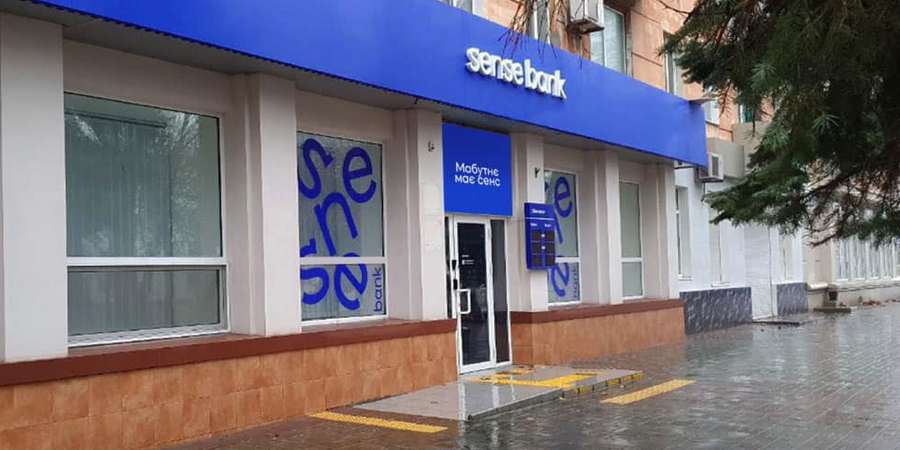
National Bank of Ukraine Chairman Andriy Pyshnyi publicly distanced himself from the personnel issue at Sens Bank — but it was precisely this distancing that intensified the discussion about who actually bears responsibility for what happened.
What Pyshnyi said — and what lies behind it
In an interview with ZN.UA, Pyshnyi clearly outlined the legal position: the NBU has no authority to change either the management or the supervisory board of Sens Bank. Article 7 of the Law "On Banks and Banking Activity" distinguishes three levels: shareholder (Ministry of Finance), supervisory board, and management. Decisions regarding management rest exclusively with the supervisory board. Decisions regarding the supervisory board itself rest with the shareholder.
"The National Bank has no such authority. Management is elected by the supervisory board."
Andriy Pyshnyi, NBU Chairman, interview with ZN.UA
At the same time, Pyshnyi stated that he has no information about Vasyl Veselyi's actual influence on the bank. This came against the backdrop of reports by Ukrayinska Pravda that it was Veselyi who allegedly dictated a list of supervisory board candidates in May 2025 — and exactly 40 days later, the Cabinet of Ministers appointed all the individuals he named.
Recordings, supervisory board, and a chronology that's hard to ignore
The scandal erupted after the National Anti-Corruption Bureau made audio recordings public in the "Midas" case. On the recordings is an alleged conversation between case defendant Oleksandr Tsukerman and Vasyl Veselyi. According to Ekonomichna Pravda, Veselyi named six candidates for the supervisory board: Piotr Novak, Yezhy Shuhayev, Eva de Falk, Oleksandr Shchur, Mykola Hladyshchenko, and Oleg Mistyuk. On June 18, 2025, the Cabinet of Ministers approved exactly this composition.
The head of that same supervisory board, Mykola Hladyshchenko, temporarily stepped down from his duties after testifying before the Verkhovna Rada committee. The NBU initiated a check of his compliance with independence criteria — something the regulator can do within its authority.
- What the NBU can do: verify that supervisory board members meet independence criteria and approve candidates.
- What the NBU cannot do: independently initiate the dismissal of management or dissolve the board.
- Who can: the shareholder — that is, the Ministry of Finance, that is, the government.
The stakes — literally
The scandal occurred at the worst possible moment: the privatization of Sens Bank is part of Ukraine's commitments to the IMF to reduce the state's share in the banking system, which exceeded 60% of assets after 2022. The bank remains profitable and systemically important — ninth place in the country by assets. However, as experts note, the reputational scandal and questions about shadow influence on corporate governance are precisely what forces potential buyers to demand deeper due diligence or postpone their decisions.
Pyshnyi himself did not appear at the committee hearing investigating the case.
If the Ministry of Finance as shareholder does not initiate personnel changes before the completion of the NBU's investigation — this will send a signal to potential investors about how real "clean" corporate governance in the bank is ahead of the sale.