NPL fell to 2009 levels, but half of the success is due to PrivatBank's write-off
The share of non-performing loans has reached a 15-year low of 12.9%. However, behind this figure lies a one-time operation: state banks wrote off over 170 billion hryvnias in old debts, while PrivatBank reduced its NPL portfolio by nearly 10 times in a single year.

By Tetiana Suchkova-Ladik
May 11, 2026 · 3 min read
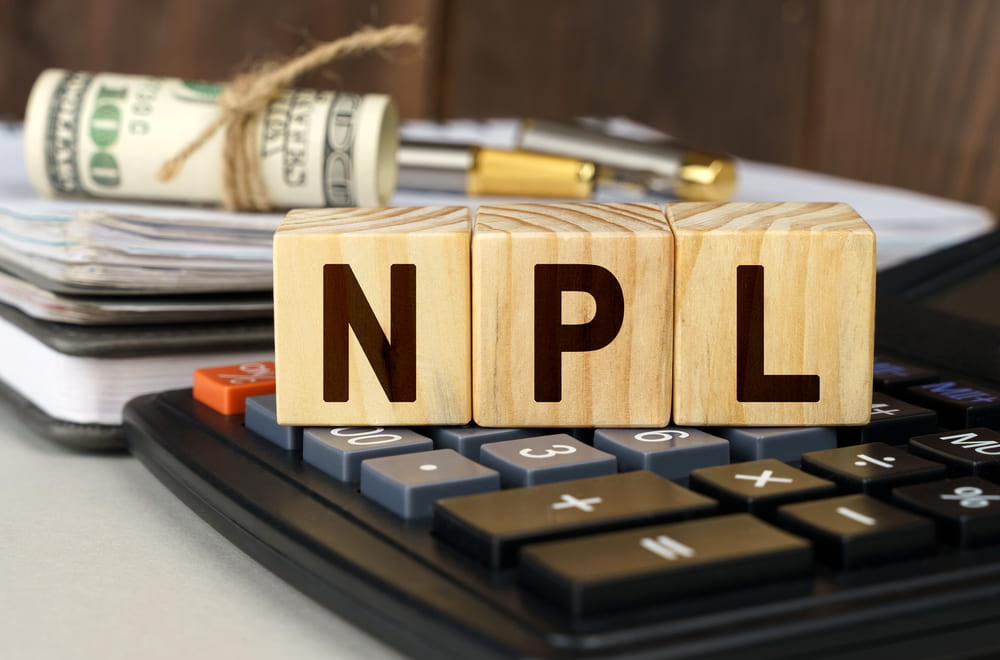
As of April 1, 2026, the share of non-performing loans (NPL) in Ukraine's banking system fell to 12.9% — the lowest level since late 2009. The indicator declined by 1 percentage point over the quarter and by 13.7 percentage points from its peak in March 2022. The National Bank explains this by two factors: growth in new lending and settlement of old debts.
But the details paint a more complex picture.
One write-off that changed the statistics
The key turning point occurred not in the first quarter of 2026, but in December 2025: state-owned banks simultaneously wrote off over 170 billion hryvnia in old non-performing assets. That's when the NPL share broke through the 14% mark.
PrivatBank made the largest contribution. According to the Financial Club, its NPL portfolio contracted by nearly 10 times — from 170.3 billion hryvnia at the beginning of 2025 to 18.8 billion hryvnia at the start of 2026. For comparison: all banks from foreign banking groups combined wrote off only 7.26 billion hryvnia over the year, while privately-owned banks wrote off 5.95 billion hryvnia.
"New loans continue to maintain high quality, with default levels at historically low levels"
National Bank of Ukraine
This is true regarding new loans. But the reduction in overall NPL is partly the result of accounting balance sheet cleanup, not just borrowers returning to payment discipline.
What's happening with actual lending
There is also an organic component. The gross volume of loans in the banking system in the first quarter of 2026 increased by 75.8 billion hryvnia (5.6%) — to 1.436 trillion hryvnia. Net hryvnia-denominated business loans in March rose 32% year-over-year, while consumer loans rose 36%. The volume of actual non-performing loans itself declined by 3.8 billion hryvnia, to 185.5 billion hryvnia.
The NPL share for individuals fell to 10.3%, while for businesses it remains higher: after declining by 1.3 percentage points over the quarter, it stands at approximately 16.6% (according to NBU data as of early March). The corporate segment is recovering more slowly — and it is this segment that forms the bulk of remaining risk.
State banks: cleaner balance sheets, but the same system share
The paradox is that state-owned banks, which most actively wrote off debts and improved statistics, remain dominant in the system. Their share exceeds 60% of assets — a level that the NBU publicly considers excessive and aims to reduce to 25-30%.
Zelenskyy has already demanded the urgent sale of Sense Bank and Ukrgasbank — this is part of obligations to the IMF. However, PrivatBank, whose one-time write-off had the greatest impact on NPL statistics, is not planned to be sold yet: it remains a profitable source of budget revenue.
- Write-offs remove NPL from the balance sheet, but do not return funds — creditors effectively recognize losses
- New loans are of good quality, but are issued under conditions of active state support and military benefits
- Corporate NPL (≈16.6%) remains twice as high as retail (10.3%)
- Privatization of two state banks will compete for a narrow circle of investors willing to accept war risk
The 12.9% figure represents real improvement from the 39.1% peak in 2022. But if in 2027 state banks do not carry out another large-scale write-off, and lending growth slows due to combat operations or rate increases — will NPL remain below 13% on its own, without one-time balance sheet operations?