Oschadbank suspended cash shipments after cash couriers were detained in Hungary — NBU covers shortfall from reserves
An incident in Budapest involving $40 million, €35 million and 9 kg of gold forced Oschadbank to temporarily suspend cash imports. We explain why this matters for the banking system and what the NBU is doing.

By Tetiana Suchkova-Ladik
March 24, 2026 · 2 min read
Briefly
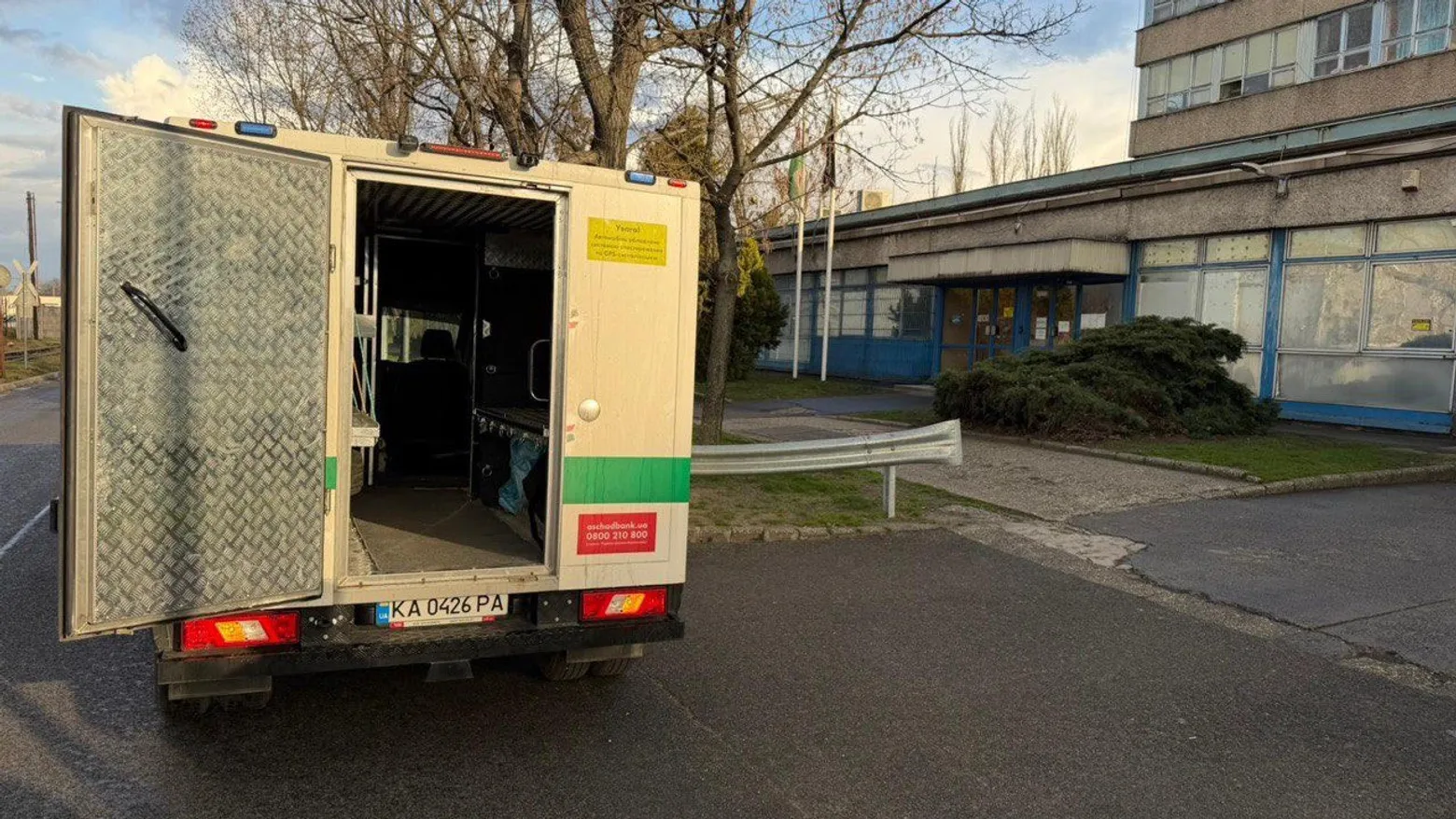
The state-owned Oschadbank has temporarily suspended the import of cash into Ukraine after its armored couriers were detained in Hungary. At a press conference, the chair of the board, Yurii Katsion, said that for now the National Bank of Ukraine (NBU) is covering commercial banks' demand for cash from its own reserves, but this solution needs a quick resolution due to the large volumes involved.
What Oschadbank and the NBU said
"Oschadbank has suspended the import of cash funds into Ukraine. The National Bank is covering the existing demand from its own reserves. However, the situation needs to be resolved because the volumes are quite significant, and the financial system needs to be supplied with cash"
— Yurii Katsion, chair of the board of Oschadbank
Facts: the Hungarian side refuses to return the seized assets — about $40 million, €35 million and 9 kg of gold. According to LIGA.net, these actions are linked to political tensions between Kyiv and Budapest; the context also includes issues of energy transit and upcoming elections in Hungary (April 12), which could affect how events unfold.
Why this matters
Liquidity and access to cash. Oschadbank is the only commercial bank in Ukraine with a current license to transport such consignments. In 2025 it supplied cash currency to 39 banks totaling about $1 billion and €800 million. Total cash sales through bank teller desks in 2025 amounted to $1.45 billion and €387 million; purchases from the public were approximately $522 million and €82 million. This is not trivial: it concerns the cash circulation that the public encounters daily.
Logistics and security
After the airspace closure from 2022, Ukrainian banks shifted from air delivery to ground armored cash-transport routes from Europe — primarily via Austria and Hungary. It is precisely this dependence on land corridors that makes the system vulnerable to political decisions and incidents on transit routes.
Context and consequences
Experts and media say the incident in Budapest is not only about money. It is a signal of how geopolitics can enter daily economic routines: cash supply chains, banks' logistics and the reputation of partners. The NBU is temporarily smoothing the shortfall from its reserves, but in the long term this issue requires a political and diplomatic solution, as well as diversification of routes and partners.
What to watch
1) The decision of the Hungarian authorities on returning the seized assets — whether this will happen before the elections and whether the political conjuncture will change Budapest's approach.
2) The level of the NBU's reserves and how long the regulator can cover demand without stressing exchange-rate formation.
3) Steps by banks to diversify cash supply routes and the potential expansion of licensing opportunities for other institutions.
Conclusion
This incident underscores one simple fact: even elements of banking infrastructure that seem transparent and technical depend on international politics and logistics. The system is working — the NBU and banks are providing short-term stability. But the security of cash supplies and the political reliability of partners remain on the agenda. Whether diplomacy and operational measures will be enough to restore regular delivery schedules is a task for authorities and financial operators.