Pension reform: minimum 6,000 and maximum 26,000 — how payments for Ukrainians will change
The Cabinet of Ministers proposes to overhaul the solidarity system, convert special pensions into occupational ones, and introduce voluntary savings. We explain who stands to gain, who stands to lose, and when this could become a reality.

By Tetiana Suchkova-Ladik
January 26, 2026 · 3 min read
Briefly
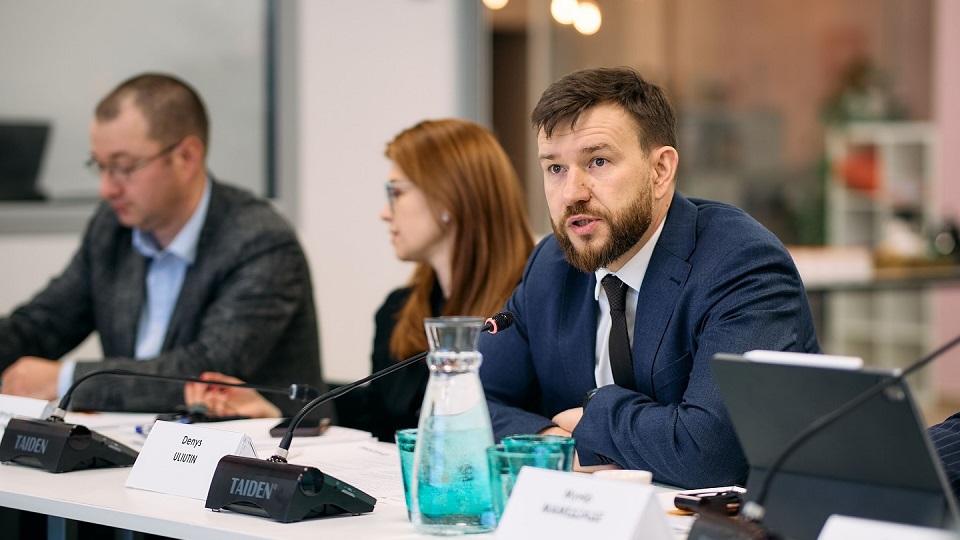
The government plans to launch a large-scale pension reform this year or next. According to Minister of Social Policy Denys Ulutin in an interview with RBC-Ukraine, the minimum pension in the solidarity system should rise to UAH 6,000, and the maximum should be capped at UAH 26,000. The reform combines three elements: updating the solidarity system, a gradual transfer of special pensions into professional ones, and the introduction of a voluntary funded tier.
What is proposed
- Raising the minimum pension — the basic payment in the solidarity system should increase to UAH 6,000 to reduce dependence on subsidies and improve the quality of life for people with the lowest incomes.
- Cap on the maximum pension — under the new model payments above ten subsistence minimums (approximately UAH 26,000) are not foreseen, because payment amounts are tied to contributions and there is currently a cap on the base for calculating the single social contribution (around UAH 160,000).
- Gradual replacement of special pensions — special pensions will be converted into professional ones; the Cabinet estimates that equalization will take at least about 13 years if it starts in 2026 or 2027.
"In this model our proposal is that we will not pay anyone less than UAH 6,000"
— Denys Ulutin, Minister of Social Policy
Why they are doing it
The goal is to restore the financial sustainability of the pension system and reduce the long-term burden on the budget. The government argues that when people receive pensions that are too small, the system is forced to compensate with other social payments (subsidies), which overall may be less efficient. Returning the principle "how much you paid — that much you receive" is intended to make the system more transparent and fair.
Who will be affected
Raising the minimum payment will benefit those who currently receive very low pensions — it directly affects purchasing power and the need for subsidies. The cap on the maximum pension will mainly affect those who received disproportionately large payments under special regimes; at the same time, during the transformation special pensions "will not become smaller, but will not increase" — a transitional mechanism meant to avoid sharp losses.
"The maximum amount from which you pay the single social contribution is also limited... in our model you still will not be able to receive a pension greater than ten subsistence minimums — that's UAH 26,000"
— Denys Ulutin, Minister of Social Policy
Timelines, risks and external partners
The government is consulting with the Ministry of Finance, the World Bank and the International Monetary Fund to ensure the reform's financial sustainability. A previous attempt to launch a funded tier (bill No. 9212) in April 2024 did not pass in parliament; the former minister had also planned a new attempt in 2025 and the start of accumulations in 2026, but this did not occur. The current minister points out that the main technical problem is finding reliable instruments for investing the accumulations.
What's next
According to the Cabinet's estimates, transforming special pensions and equalizing the solidarity system is a multi-year process (roughly 13 years if starting in 2026/2027). Political will, agreement with the Ministry of Finance and international partners, and clear rules for investing the accumulations will determine whether the reform stabilizes the system without creating additional pressure on the budget.
Conclusion
The reform aims to solve two tasks at once: raise minimum payments and rein in disproportionate maximum pensions, to ensure the system's sustainability. This is not a quick fix but a gradual transformation on which the economic security of many elderly Ukrainians depends. Now the question is for parliament and financial partners: will these proposals be turned into concrete legislative steps and financing mechanisms?