PrivatBank and Mastercard continue free card delivery until the end of 2026 — what it means for Ukrainians at home and abroad
Free delivery of cards is not just a convenience. It is a step toward stable access to funds for internally displaced persons, the diaspora, and small businesses. We explain how to take advantage of the new provision and what it means for citizens and the economy.

By Tetiana Suchkova-Ladik
March 16, 2026 · 2 min read
PrivatBank and Mastercard — free card delivery through the end of 2026
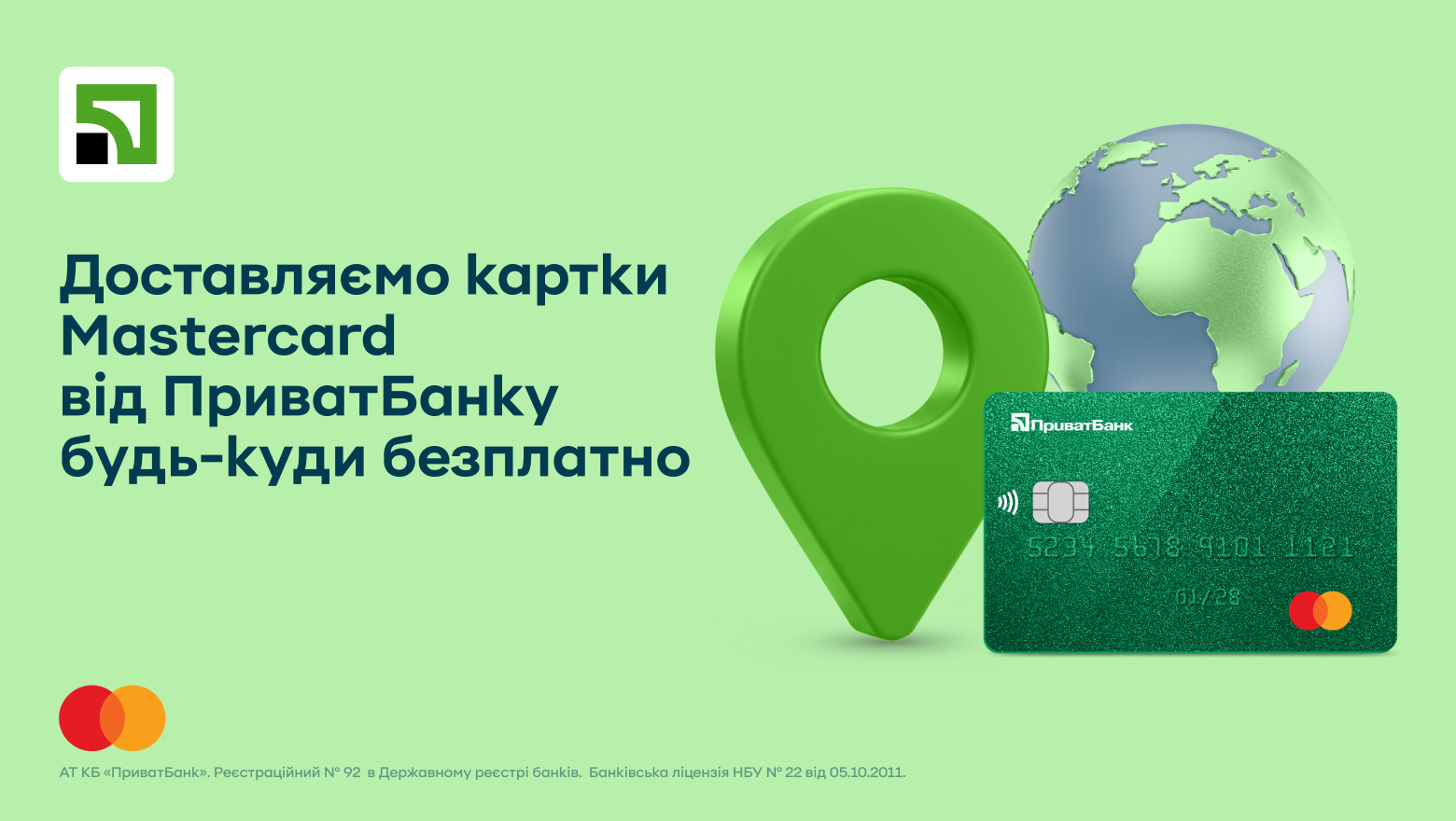
PrivatBank and the global payment operator Mastercard are continuing the free delivery service for payment cards to the bank’s customers in Ukraine and abroad throughout 2026. This is officially confirmed by Dmytro Musiienko, a member of PrivatBank’s management board for retail business.
"Delivery of Mastercard cards to the bank’s customers both within Ukraine and abroad will be free throughout 2026."
— Dmytro Musiienko, member of PrivatBank’s management board for retail business
Who can use it and how
You can order a new card or reissue an existing one in a few clicks via the Privat24 app. Pickup is available at a branch or via a Nova Poshta parcel machine within Ukraine; abroad — delivery through Nova Poshta or Ukrposhta to addresses in more than 60 countries.
According to the bank, in 2025 customers received over 1.2 million cards delivered within Ukraine and almost 150,000 abroad. The most popular foreign destinations were Poland, Germany, the Czech Republic, the USA, the UK, France and Spain.
Logistics, security and digital alternatives
In wartime conditions the bank has already extended card expiration dates, ensuring continued access to payments and cash withdrawals. For online purchases or urgent cash needs a customer can instantly issue a digital card in Privat24; a physical plastic card can be ordered for delivery.
Free logistics reduce transactional barriers: people do not need to return to their previous place of residence or spend time and money to collect a physical card. For internally displaced persons and the diaspora this is a concrete mechanism for accessing savings and social payments.
Why it matters for the state and the economy
This initiative is an example of how a private bank and an international partner strengthen financial infrastructure during a crisis. From an economic standpoint, convenient access to cards helps preserve cashless flows, reduces dependence on cash, and simplifies transfers between the diaspora and relatives in Ukraine.
Experts insist that infrastructural steps must be practical, not merely symbolic. In that sense, free delivery is not just marketing but an operational tool to support payment stability.
Brief conclusion
Free card delivery through the end of 2026 is a real benefit for millions: it simplifies access to finances, supports displaced people and strengthens ties with the diaspora. The next test is whether these temporary measures will become long-term practice in the financial system. For users the question remains simple: is your updated card already waiting in Privat24?