PrivatBank wants to enter the EU market — but first the state must decide whether to sell it
The chairman of the board Mikael Björknerth publicly speaks about ambitions to become a "model for Europe." Behind the scenes — an open question of privatization and 20 billion in dividends that the bank recently transferred to the state.

By Tetiana Suchkova-Ladik
May 21, 2026 · 3 min read
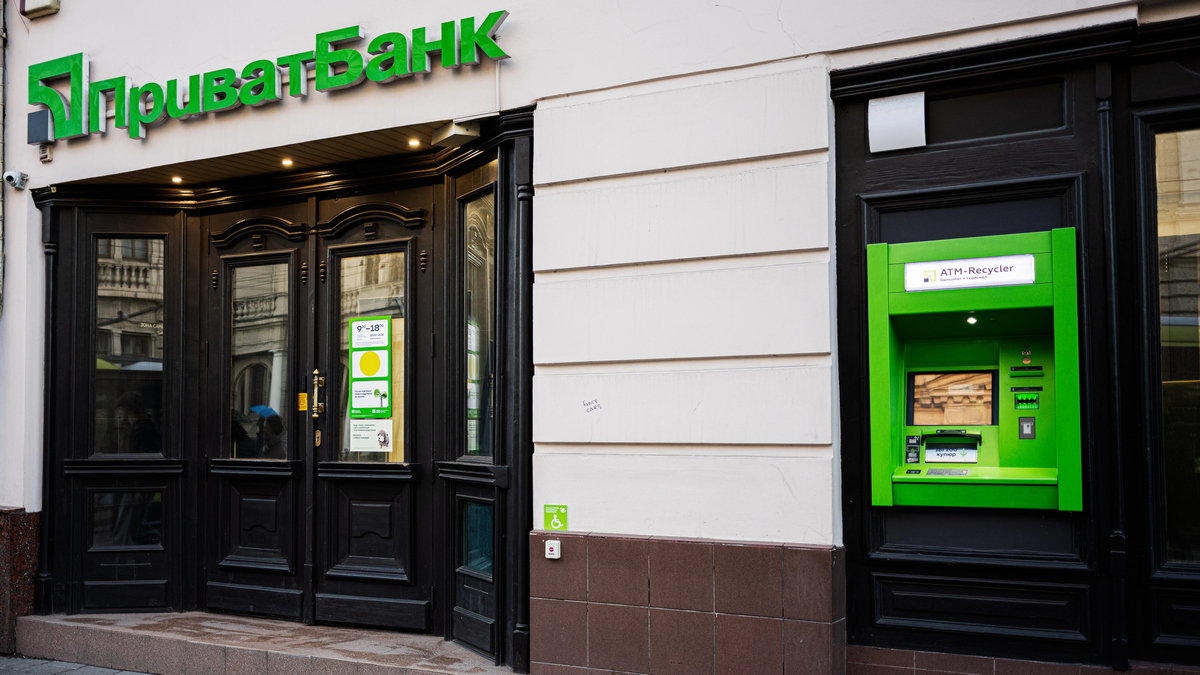
On May 20, at a press conference in Kyiv, PrivatBank Chairman Mikael Björknert articulated a goal rarely voiced by state banks in a country in active warfare: to enter the European market. "We are not ashamed to say that we want to be the largest bank, as well as a quality European bank and a profitable bank, to become an example for Europe as we draw closer to it," Interfax-Ukraine quoted him as saying.
What Lies Behind the Statement
Björknert has headed PrivatBank only since January 20, 2025, following an international competitive selection. A Swede by origin, he arrived with a reputation as a reformer and immediately began positioning the bank as an institution preparing for Ukraine's post-war integration into the EU.
The numbers confirm: the bank is indeed in good shape. Based on 2024 results, net profit exceeded 40 billion hryvnias—a record in its history and 6% higher than in 2023. According to the NBU, PrivatBank generates over 43% of the entire banking sector's profit. In May 2025, it transferred 20.4 billion hryvnias in dividends to the state, in addition to 58.2 billion hryvnias in corporate income tax paid for the previous year.
"Now is probably not the best time to sell anything in Ukraine, especially given our scale and size. Our task is to prepare, transform, and make the bank as attractive as possible, so that if the government decides to sell shares, it can receive the highest price for them"
PrivatBank Board Chairman at the same press conference
A Trap for the State: Cannot Sell, Cannot Keep
Ambitions to enter the EU market are directly linked to an unresolved ownership question. PrivatBank remains state-owned—it was nationalized in 2016 following the discovery of a balance sheet hole that the investigation linked to former owners. In 2025, the bank won international arbitration that obligates ex-shareholders to pay over $3 billion.
The government's strategy envisages reducing the state's share in the banking sector, but there are no specific timelines for PrivatBank. Economist and former member of the NBU Council Vitaliy Shapran explains the logic of the impasse: "PrivatBank provides a large share of budget financing through dividends, and the state is not yet ready to forgo these revenues, especially since the sale price during wartime will not be high."
Andriy Yanitskiy, in a comment to Radio Free Europe/Radio Liberty, assesses the potential differently: the bank "could be worth a lot of money"—among economists, he has heard valuations from 100 billion hryvnias and higher, plus the prospect of recovering funds from former shareholders. But both Yanitskiy and Shapran agree: without a clear decision on privatization, any statements about Europe remain a horizon, not a route.
What "Entering the EU Market" Means in Real Terms
- Opening branches or subsidiaries in EU countries requires regulatory approval from the ECB or national regulators—a process that takes years even in peacetime.
- State ownership complicates obtaining banking licenses in the EU due to requirements for capital structure and management independence.
- In July 2025, PrivatBank signed an agreement with the EBRD for 185 million euros in guarantees—this provides Ukrainian businesses with up to 600 million euros in additional financing and is a real step toward integration, but not entry into Europe's retail market.
That is, the bank is moving in the right direction through partnerships with international institutions—but the distance between "being attractive to the EBRD" and "opening a branch in Warsaw or Berlin" is measured not in years of ambition, but in a specific Cabinet decision regarding ownership.
If the state does not make up its mind about the privatization format—partial or complete—by the end of 2026, then a European-style bank with a Kyiv address will remain a marketing slogan: a foreign investor will not enter a state structure without a clear exit scenario, and EU regulators will not issue a license to a bank owned by the government of a candidate country in the midst of active conflict.