Putin asks oligarchs to fund the war: what it means for the Kremlin and Russia
The Kremlin has asked big business to make "voluntary" contributions — this is not just about money but a test of the elites' solvency and loyalty. We examine why the signal matters right now and what consequences it has for Russia and for Ukraine.

By Tetiana Suchkova-Ladik
March 27, 2026 · 3 min read
What happened
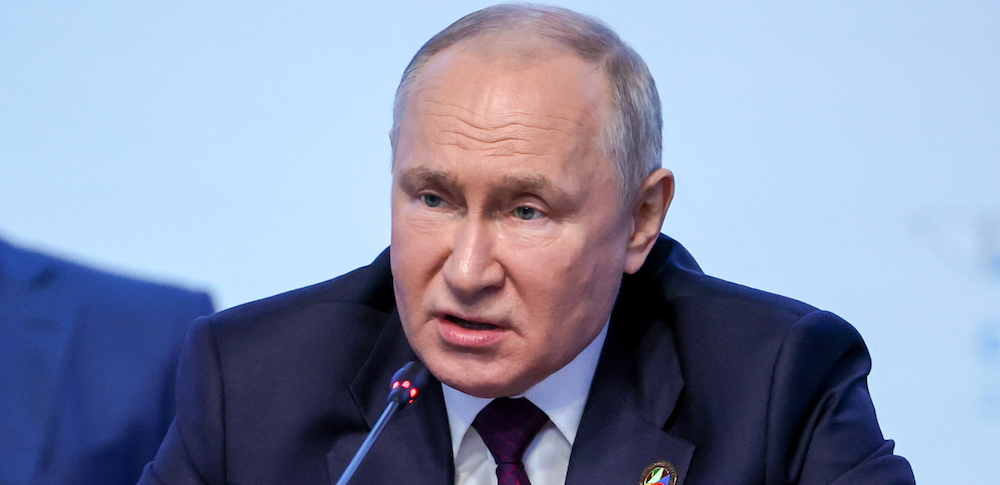
On 26 March Russian President Vladimir Putin personally appealed to those present at a meeting of major businessmen, urging them to make "voluntary" contributions to the state budget to stabilize the country's finances, reports the Financial Times, citing sources. The Russian publication The Bell also confirms the report of the appeal.
According to the media, some businessmen reacted to the request immediately during the meeting: Suleiman Kerimov reportedly promised to contribute 100 billion rubles, and another major entrepreneur, according to sources, also agreed without naming an amount. FT identifies another participant in the meeting as Oleg Deripaska.
"He is determined to continue the war until he captures the entire Donetsk region, because Ukraine will not give it up voluntarily"
— Financial Times (based on Kremlin sources)
Why it matters
Briefly — because of the money and the signal. FT estimates that Russia's war expenditures in 2025 have risen to 13.1 trillion rubles, exceeding the entire state budget of Ukraine. At the same time, Russia's budget deficit for January–February exceeded more than 90% of the annual plan. The tax base is weakening, reserves are being depleted, and external sanctions limit access to the capital market.
So the request to the oligarchs is not only a way to quickly fill the coffers. It is a test of the elites' readiness:
- whether major owners will agree to cover budget gaps;
- whether they are prepared to demonstrate loyalty to the regime under the pressure of economic costs;
- which mechanisms the authorities will use next — from raising VAT (already 22%) to a possible one‑off windfall profit tax.
"Suleiman Kerimov promised to contribute 100 billion rubles"
— The Bell (sources at the meeting)
Consequences for the Kremlin, the elites and Ukraine
There are several clear consequences. First, if the oligarchs agree, the Kremlin temporarily reduces the risk of a financial shortfall for defense spending — meaning the war can continue without a sharp pause for lack of funds. Second, it increases business dependence on political loyalty: the contributions further underscore that private capital in the current circumstances must be "useful" to the state.
Third, for the Russian economy itself such measures are a symptom of deeper problems: higher taxes, redistribution of income, increased pressure on the private sector. Western analysts note that further capital flight or unwillingness to pay could intensify political tensions within the elites.
For Ukraine this is an ambiguous signal: on the one hand, the Kremlin is finding funding sources to continue offensive actions; on the other, the public pressure on oligarchs indicates a weakening economic cushion in Russia, which could increase the vulnerability of the Russian economy in the medium term.
Summary
This appeal is not an isolated fiscal initiative but a demonstrative decision that combines finance and politics. For the Kremlin the priority now is to keep funds in reserve for military spending; for the elites — to find a balance between preserving business assets and demonstrating loyalty. For Ukraine and its partners it is important to read such signals soberly: short‑term budget replenishment may mean a prolongation of the conflict, but it also opens a window for international pressure on economic and financial markets.
Whether these "voluntary" contributions will be enough to withstand the next stages of escalation is a question that now must be answered not only by the oligarchs but also by those who control the Kremlin's financial flows.



