Putin Demanded Economic Decline Be Avoided — Economy Shrinks for First Time in Three Years
Russia has revised its GDP growth forecast for 2026 by a factor of three — from 1.3% down to 0.4%. Behind these figures lie real declines in household incomes, corporate defaults, and the cost of a war economy.

By Tetiana Suchkova-Ladik
May 12, 2026 · 2 min read
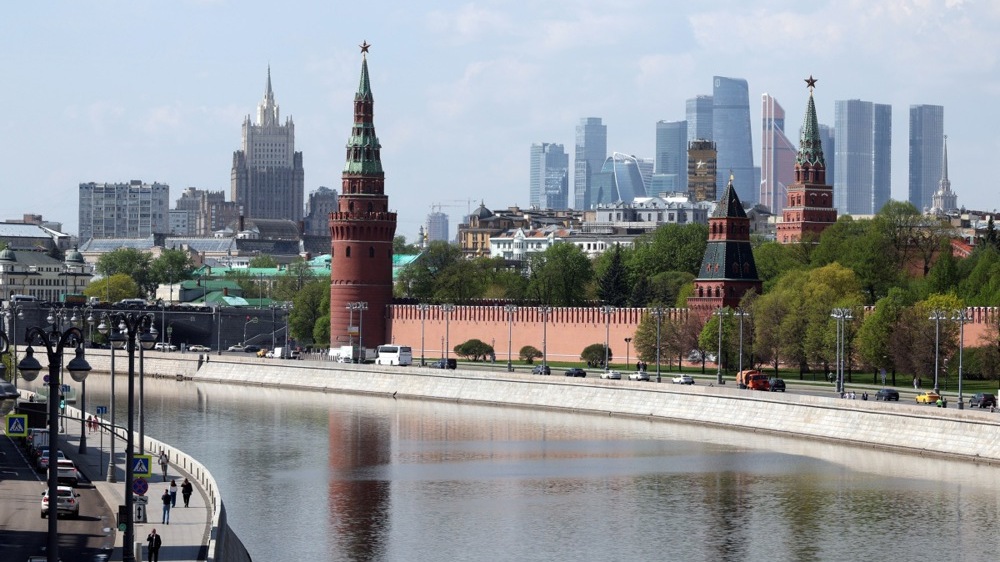
Russian Vice Prime Minister Alexander Novak announced in an interview with Vedomosti that the government has reduced its GDP growth forecast for 2026 to 0.4% — three times lower than the previous target of 1.3%. At the same time, he acknowledged that in the first quarter of 2026, the Russian economy contracted for the first time in three years.
What lies behind the forecast revision
According to the Russian Ministry of Economic Development, GDP contracted by 0.5% year-over-year in the first quarter — against the expected growth of 1.6%. As Fortune reports, one reason was the VAT increase that the Kremlin introduced to finance the war.
The oil factor adds pressure: Novak included an oil price of $59 per barrel in the 2026 budget forecast — exactly at the "cutoff" price, below which revenues do not flow into the reserve National Welfare Fund. For the next three years, $50 per barrel is projected.
"It is important to continue pragmatic and conservative policy. The crisis creates conditions for increasing export revenues from oil and gas, but this effect is not long-term."
Alexander Novak, Vice Prime Minister of Russia, interview with Vedomosti
What this means for Russians
According to the government forecast, real incomes will grow by only 1.6% — compared to 7.7% in 2025. Consumer spending growth will slow from 4% to 1.2%. Inflation will remain elevated at 5.2%. Investments will continue to decline.
Meanwhile, the number of corporate defaults is increasing: if there were 11 technical defaults on the debt market in 2024, in 2025 — already 24, then just in the first quarter of 2026 — another 11, according to Izvestiya, as cited by Fortune.
Economists' reaction
Andrey Gnidchenko from the CMAKP analytical center called the new forecast a surprise — according to him, it diverges from the assessments of most leading Russian and international institutions. Economist Dmitry Polevoy noted that "obviously higher levels of budget expenditures" remain the main source of uncertainty and risk for the forecast.
As The Moscow Times writes, the government hopes for a recovery starting in 2027 — when the Central Bank begins to lower its rate (currently at 21%). GDP growth is projected at 1.4% in 2027 and 2.4% by 2029.
Putin and reality
In April, Putin publicly criticized ministers for the economic slowdown, insisting that a recession must be avoided. According to Fortune, after that he largely disappeared from the economic agenda. Meanwhile, according to the Atlantic Council assessment, military spending no longer allows Russia to simultaneously increase production in both the defense sector and the civilian sector — and it is poorer regions and population segments that will feel this first.
Russia spends approximately 15.86 trillion rubles per year on defense — significantly more than officially declared in the budget — while these funds barely increase the supply of consumer goods and only fuel inflation.
If the Central Bank cannot lower its rate before 2027 due to persistent inflation, the recovery forecast of 1.4% will become just another figure that will need to be revised.