Verkhovna Rada abolishes mandatory certificates of completed works — who benefits and where restrictions remain
Parliament has passed a law removing the requirement for a second signature on primary financial documents. This reduces bureaucracy and could save billions, but some transactions will remain under strict control.

By Tetiana Suchkova-Ladik
February 24, 2026 · 2 min read
What was approved
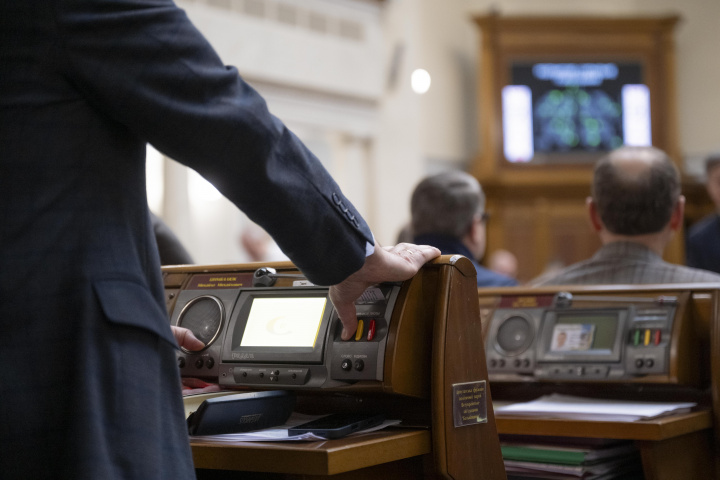
On 24 February the Verkhovna Rada voted (230 votes) for amendments to primary accounting documentation under draft law No. 14023. The essence — the mandatory second signature on acts of completed works (provided services) is canceled, unless otherwise stipulated by the contract, and transactions are recorded in accounting in the period of their execution.
Why this matters for business
Small and medium-sized businesses will get simpler document flow: less paperwork, fewer additional accountants and faster settlement processing. According to CASE Ukraine's estimate (2021 prices), dropping mandatory acts could yield savings of up to UAH 34 billion per year (approximately 0.6% of GDP of that period). An InfoSapience survey shows that 74.1% of entrepreneurs support this initiative.
"It's one provision, but it was very hard for us. The Ministry of Finance is not thrilled with this draft law, the State Tax Service is also not thrilled. But business insists and asks for support. Because if it, in its relations among itself, decides that it doesn't need two signatures... then that's its right"
— Danylo Hetmantsev, head of the Verkhovna Rada's Finance Committee
Where control remains
The changes are not a total relaxation of control: the provision does not apply to operations paid from public funds, lease agreements for state or municipal property, construction contracts, donations and humanitarian aid. That means: budgetary and high-risk areas remain under control, while business receives simplification where it is safe.
Risks and opponents' arguments
The Ministry of Finance and the State Tax Service expressed concerns about potential risks to fiscal control and abuses. The practical effect will depend on how internal procedures are changed, how contracts are adapted and how the recording of transactions in the period of their execution is monitored.
What's next
The decision is a step toward deregulation in the interest of business and one of the few reforms that directly reduces firms' operating costs during a crisis. At the same time, the effectiveness of the measure will be measured not by votes in the chamber but by real changes in accounting practice, sanctions for abuses and contract transparency. Whether these savings will become a significant stimulus for the Ukrainian economy depends on practical implementation and oversight.
Sources: text of law No. 14023, comments by the head of the Finance Committee, CASE Ukraine research, InfoSapience survey.