S&P upgrades Ukraine's rating to "CCC+": a signal to markets and a test of resilience
After the exchange of GDP warrants at the end of December 2025, S&P raised the rating from "SD" to "CCC+". This reduces the burden of debt servicing — but does not eliminate war-related risks. We examine what changes for the economy and security.

By Tetiana Suchkova-Ladik
January 23, 2026 · 2 min read
What happened
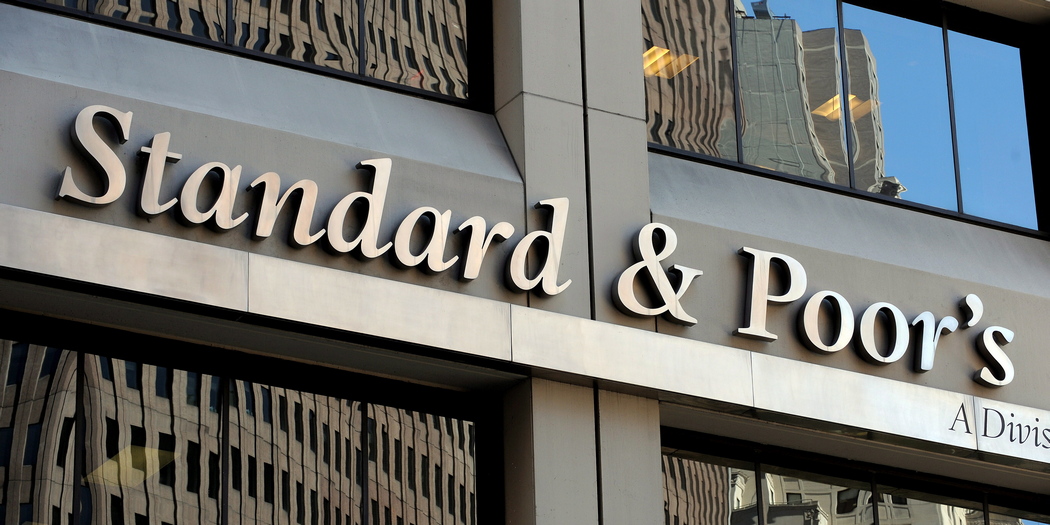
The international rating agency S&P Global Ratings upgraded Ukraine’s long-term foreign-currency sovereign credit rating from “SD” (selective default) to “CCC+”. The decision, published by S&P in a release (text cited by LIGA.net), is linked to the exchange of Ukrainian GDP warrants for new securities maturing in 2032, completed at the end of December 2025; the new securities were also assigned a “CCC+” rating.
“Although a small portion of commercial debt remains in default (less than 2.5% of total commercial debt), this will not materially affect the country’s ability to service other obligations.”
— S&P Global Ratings
Why this matters
In effect, the 2024–2025 restructuring reduced Ukraine’s external commercial debt servicing needs to about $1 billion per year on average over the next three years. The first principal repayment on external bonds is not expected until 2029 — this provides additional room for financial stabilization and budget planning during the war.
Outstanding issues
Despite the positive momentum, Ukraine still needs to complete several technically important deals: finish restructuring $2.6 billion of GDP warrants, reach agreement on the state‑guaranteed Ukrenergo eurobonds of $825 million (a preliminary deal exists, but completion has been pushed to early 2026), and settle the external commercial loan from Cargill of $0.7 billion. Without progress on these items, the rating could again come under pressure.
Balance of risks: security vs. partner support
S&P affirmed a stable outlook for the rating, highlighting two poles: on one hand — manageable debt obligations and expected support from the EU and partners; on the other — high uncertainty due to the war. The agency explicitly forecasts that high‑intensity hostilities could continue through 2026 — and a deterioration in the security situation would remain a key factor for a possible downgrade.
What this gives Ukraine — and what must change
The upgrade to “CCC+” is not a return to investment grade, but it sends a clear signal: markets and creditors see progress on the external debt issue. For business and public finances this means potentially cheaper short‑ and medium‑term financing, a stronger negotiating position for further deals, and increased confidence from partners. At the same time, two things are needed to push the rating higher: a real reduction in military risks and improvements in medium‑term macroeconomic indicators.
“S&P’s decision reflects the balance between manageable debt obligations and expected steady support from the European Union, but high security risks remain a key constraint.”
— S&P Global Ratings
Summary
This is a step forward — the result of a complex 2024–2025 restructuring that gives Ukraine room to restore financial stability during the war. However, the “CCC+” status is a reminder that market confidence is returning gradually, and a final rating improvement depends not only on accounting deals but also on the security and economic fronts. The next move is up to partners and to turning these political signals into sustainable investments and long‑term support.