Switzerland freezes Maduro's assets — a precedent for international investigations and sanctions
The Federal Council has frozen the funds of Nicolás Maduro and his associates — how it works and why the decision is important for accountability mechanisms, including for Ukraine.

By Tetiana Suchkova-Ladik
January 5, 2026 · 2 min read
Briefly
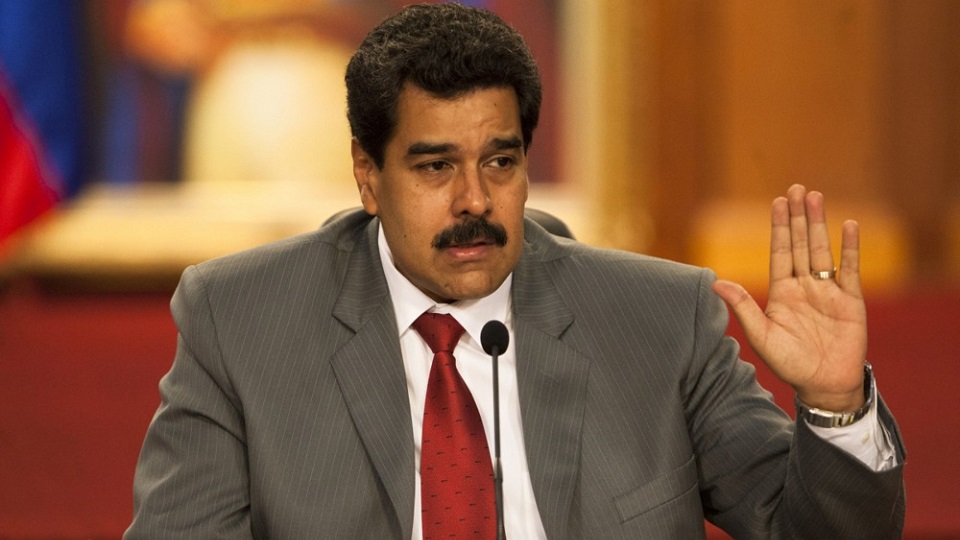
On 5 January 2026 the Federal Council of Switzerland decided to immediately freeze all assets of Nicolás Maduro and members of his inner circle. The decision was published on the government's website and takes effect immediately; it can remain in force for up to four years, unless reviewed earlier.
What was announced
"On 5 January 2026 the Federal Council decided to immediately freeze any assets of Nicolás Maduro and other persons associated with him in Switzerland. By doing this, the Federal Council seeks to prevent the outflow of assets"
— Federal Council of Switzerland
The document clarifies that the measures do not apply to members of Venezuela's current government. The legal basis cited is a special law that allows temporarily blocking the assets of former politically exposed persons from other states. The government explains the aim simply: to ensure that funds likely obtained illegally do not disappear before possible legal proceedings.
Context: why now
Switzerland's decision coincides with events in Venezuela — on 3 January 2026 Nicolás Maduro was detained by U.S. forces and brought to the United States. In this situation the asset freeze serves two purposes: a technical one — to prevent the diversion of funds, and a political one — to support the legal mechanisms for subsequent investigations and criminal prosecutions.
Why this matters for international politics and law
First, it is a practical tool for blocking resources that could be used to evade accountability. Second, Switzerland's decision underscores the readiness of neutral jurisdictions to contribute to enforcement through law, not only through political pressure.
Analysts in Europe and the U.S. have already noted that such steps facilitate coordination among law‑enforcement agencies and increase the chances of successful confiscations in future trials. At the same time, legal procedures remain complex — proving the origin of assets and establishing causal links requires time and a solid evidentiary base.
What this means for Ukraine
For Ukraine, Switzerland's decision is an important precedent. It confirms that even traditionally neutral financial centers are prepared to act against individuals suspected of serious corruption or criminal schemes. This strengthens Kyiv's arguments in negotiations on international assistance for recovery and asset return: coordination with partners can provide a real mechanism for accountability and compensation for damages.
Consequences and next steps
Switzerland is simultaneously urging avoidance of escalation and offering its mediation services for a peaceful resolution. Practically, this means actions should take place within the framework of international law, rather than provoking new conflicts.
Now the key question is whether the frozen assets will be turned into actual evidence and, ultimately, into compensation for victims. The answer depends on international coordination among investigative bodies, the quality of the evidence base, and the political will of partners.
Summary: Switzerland's decision is not an emotional gesture but a legally motivated step that makes mechanisms for accountability more real. For Ukraine this is a signal — international instruments are working, and they can be used to help restore justice and return assets.