Trump wrote that Iran underwent a "productive regime change" — while Tehran rejects the American plan
Against the backdrop of a fragile two-week ceasefire, Trump announced negotiations on tariffs and sanctions via Truth Social — but Iran has already called the American 15-point plan "unacceptable" and has no intention of abandoning uranium enrichment.

By Oleg Bazylewicz
April 8, 2026 · 2 min read
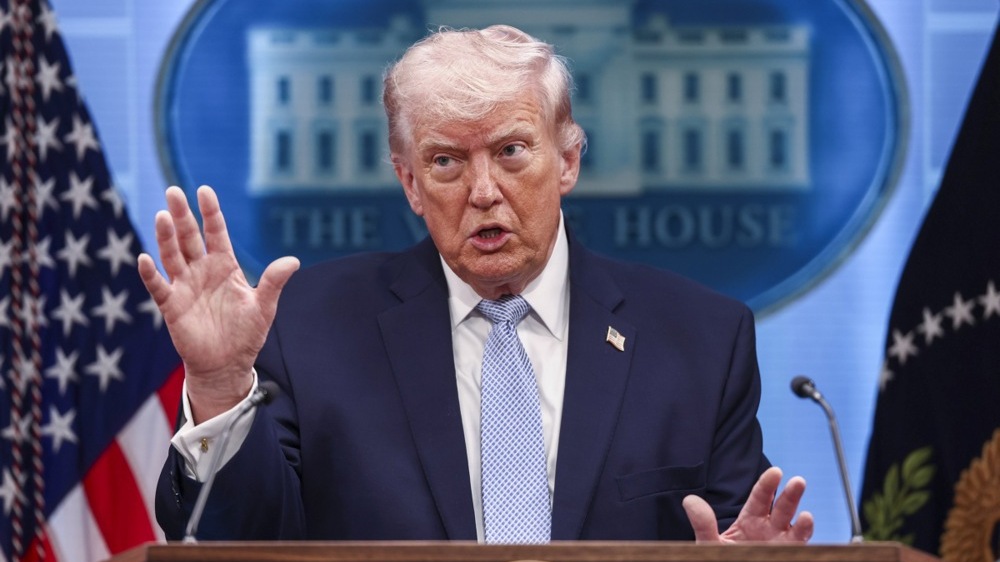
As American and Iranian diplomats attempt to maintain a two-week ceasefire mediated by Pakistan, US President Donald Trump posted on Truth Social a message that simultaneously contains a promise and a threat — with no verification mechanism for either.
What exactly Trump wrote
In his first post, Trump claimed that Iran has undergone a "productive regime change" and that Tehran will not enrich uranium, while the US will work with it to "dig up and remove all deeply buried nuclear dust" — a direct reference to facilities previously targeted by B-2 bombers in Operation Midnight Hammer.
"The United States will work closely with Iran, which, as we have determined, has gone through what will be a very productive regime change!"
— Donald Trump, Truth Social
In a separate post, he warned that any country supplying weapons to Iran would face immediate tariffs. This is not a new measure — back in February 2026, Trump signed an executive order allowing tariffs on imports from countries that purchase Iranian goods. The April post is a public activation of this tool.
15 versus 10: the arithmetic hiding the conflict
Trump claims that "many points from the 15-point plan have already been agreed upon." But Iran's official Foreign Ministry spokesman Ismail Baghaei has already called this plan "unacceptable." The Iranian side insists that negotiations must be based on its own 10-point plan — which includes the withdrawal of American forces from regional bases, lifting all sanctions, and reconstruction.
Notably, even the ceasefire is formulated asymmetrically: as CNN reports, Iranian Foreign Minister Abbas Araghchi stated that "safe passage through the Strait of Hormuz will be possible in coordination with Iran's Armed Forces taking into account technical limitations" — meaning Tehran reserves the right to regulate passage conditions.
The nuclear issue: positions publicly incompatible
US Defense Secretary Pete Hegseth stated that the transfer of enriched uranium is "not a subject of negotiation." The Iranian side is equally categorical: Araghchi has repeatedly emphasized that uranium enrichment is an "inalienable right" of Iran and is not subject to discussion. There are no verification mechanisms in public documents showing what both sides mean by an "agreement."
- The US demands: complete dismantling of the enrichment program, transfer of uranium reserves to a third country
- Iran agrees to: a "coordinated" Strait of Hormuz regime, negotiations based on its own 10 points
- What they share: both sides publicly say "yes" to negotiations — and publicly reject each other's key conditions
Declaration or roadmap?
Trump wrote "many points have been agreed upon" — but no joint document has been published, and the Iranian side has not confirmed any specific point. A Truth Social post is neither a memorandum nor a framework agreement. The mediator, Pakistan, negotiated a pause in hostilities, not the architecture of peace.
Negotiations in Islamabad scheduled for April 10 will show whether there is any common ground behind the public statements — or whether these are parallel monologues on the same stage. If within two weeks the sides do not agree on at least a protocol regarding the IAEA and enrichment, the ceasefire will turn into a simple tactical retreat by both sides.