Trillion Without Payment Guarantees: How Ukraine Is Building a Mechanism to Recover Damages from Russia
Damage from 12 years of war is estimated at over $1 trillion, but between this figure and actual funds stands at least a year of ratifications, legal labyrinths, and $300 billion in frozen assets that remain inaccessible in full.

By Tetiana Suchkova-Ladik
May 14, 2026 · 3 min read
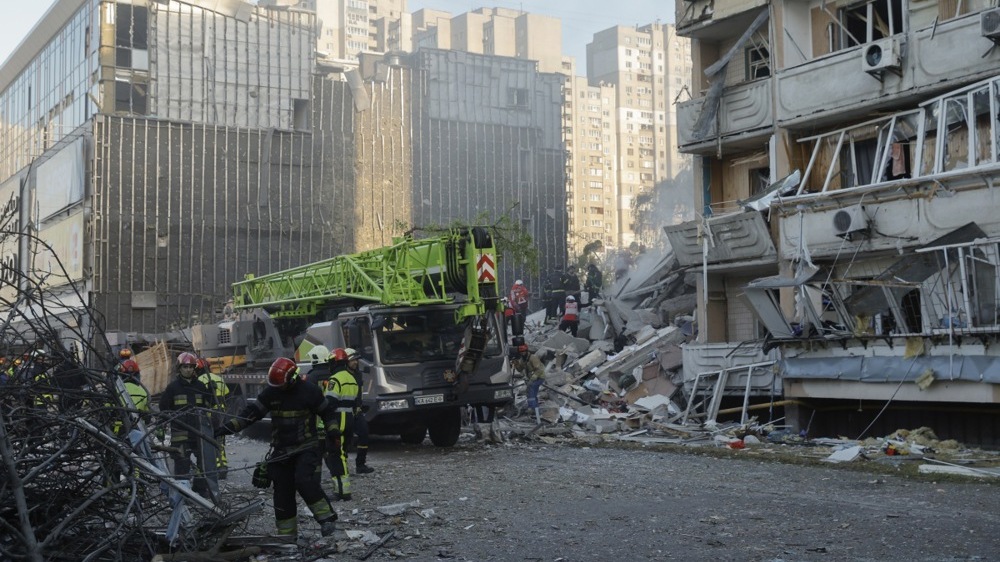
Deputy Head of the Presidential Office Iryna Mudra cited a figure that has already become a refrain of official Kyiv: damages from Russian aggression since 2014 exceed $1 trillion. But more important than the sum itself is the answer to the question — who, when, and through what mechanism will pay it.
What Already Exists: Registry, Convention, Ratification
The international compensation mechanism is being built in stages. The Registry of Damages in The Hague began operating in April 2024 — it has already received over 150,000 claims from victims, with the total expected number ranging from 6 to 10 million.
The next step is the International Compensation Commission. The convention on its establishment was signed on December 16, 2025 in The Hague by 35 countries and the European Union. The Verkhovna Rada ratified the document on April 30, 2026.
"Realistically, we need about another year for ratifications, and by mid or the third quarter of 2027 there will definitely be 25 ratifications"
Iryna Mudra, Deputy Head of the Presidential Office, European Integration
Exactly 25 ratifications — the legal threshold for the convention to enter into force. After that, the commission will have three months to launch. That means a realistic horizon — late 2027 or early 2028.
Where the Money Is: $300 Billion in Question
The $1 trillion damages estimate is the sum of claims. Actual coverage is much lower. The World Bank estimates verified damages from the full-scale invasion at $667 billion. The main source Kyiv is counting on is the frozen assets of Russia's Central Bank at around $300 billion, predominantly in the European Union.
But there is a direct legal constraint: these funds are currently not confiscated, only frozen. Profits from them partially go to Ukraine through the ERA mechanism, but there is no access to the main body of assets. As Mudra herself acknowledged:
"At the moment, there is no political will to gain access to the entire sum of Russian assets"
Iryna Mudra, UNIAN
At the same time, she noted that Ukraine "has great hopes to press the issue of frozen assets" and transfer them to the compensation fund as a "quick, legal source" for payments.
Practical Dimension: What It Means for Victims
For citizens, the algorithm is as follows: submit a claim to the Registry of Damages (currently 13 categories are open, more will open soon), wait for the commission to assess the claim, and receive a decision on the amount. But a decision is not yet money: payment depends on the compensation fund being filled, which does not yet exist.
Mudra emphasized that Ukraine "will not allow" the commission's decisions to remain on paper. However, there is no enforcement mechanism: Russia can ignore any international decisions just as it has ignored ECHR decisions for over 10 years.
Why This Is More Than Just Numbers
$1 trillion is not just destroyed houses. According to Mudra, the sum includes environmental damage, lost business, energy infrastructure degradation, and human capital — that is, categories that are difficult to assess and even harder to prove in international court. The calculation methodology is still not standardized, which opens an opportunity for Russia to challenge every figure.
If by the end of 2027 25 countries ratify the convention and the commission actually begins work — the next key test: will Ukraine and its partners succeed in transforming the frozen $300 billion from a "potential source" into a real compensation fund without waiting for a formal peace with Russia.