Hungary received a budget with a hole of 6.8% of GDP — and the question of who concealed it
New Prime Minister Peter Szijjarto announced that the Orban government likely falsified budget targets. The finance minister confirms that it will take another one and a half months of audit to understand the real state of the treasury.

By Tetiana Suchkova-Ladik
May 21, 2026 · 2 min read
When Hungary's election campaign ended in spring, the official forecast for the 2026 budget deficit was 3.9% of GDP — then it was quietly revised to 5%. Now Prime Minister Péter Magyarra is calling the real figure: 6.8% of GDP. The difference is nearly double the initial target.
What happened to the numbers
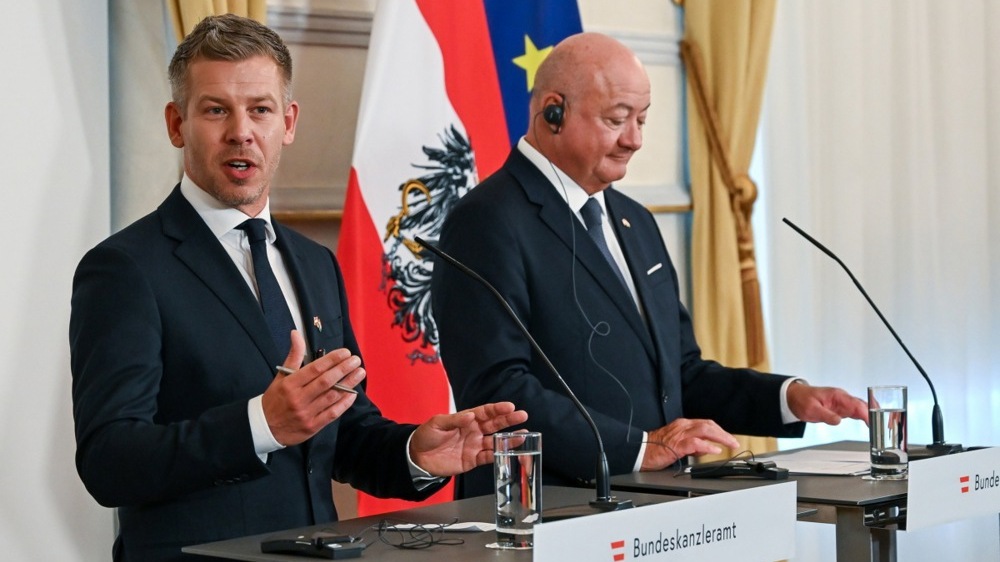
At a press conference in Vienna alongside Austrian Chancellor Christian Stocker, Magyar stated: the previous government apparently falsified budget data and the deficit target. According to him, the new cabinet is still reviewing documents from the Orbán administration, and he characterized the state of the budget in one word — "deplorable."
"The budget deficit for 2026 will be very high. The previous government apparently falsified budget data and the deficit target."
Péter Magyar, Prime Minister of Hungary
The Orbán government denied the accusations even before the handover of power: according to statements from its representatives, the cabinet only paid out previously approved amounts and directly prohibited taking on new obligations. However, as Bloomberg reports, two of Hungary's central bankers also publicly warned about overspending risks — before the official handover of power.
Specific gaps have been documented: according to Daily News Hungary, the budget had items removed, including 87.2 billion forints for the Budapest-Belgrade railway and 22.3 billion forints for connection to a battery plant in Ivancsa — totaling over 286 billion forints at just one ministry.
What this means for Hungarians
By April 2026, Hungary had already used approximately 70% of its annual deficit limit — this occurred due to pre-election spending during Orbán's time, as reported by Reuters. If the deficit truly reaches 6.8% of GDP, it would nearly double the EU's threshold of 3%. Hungary is already under the EU's excessive deficit procedure.
Oxford Economics warns: "a certain degree of fiscal consolidation will be necessary, which could potentially restrain domestic demand in the short term." In simpler terms, strict austerity will hit household consumption hardest. According to economist Zsolt Darvas, "consumer taxes are already extraordinarily high and disproportionately burden low-income families."
What the new government is doing
Finance Minister András Kármán told Reuters that the government needs another one and a half months to get a full picture of the 2026 budget situation. After that, a revised budget will be prepared — the foundation for a four-year plan to reduce the deficit to the EU threshold of 3% of GDP and meet criteria for eurozone accession by 2030.
Kármán also promised to make fiscal targets "transparent and predictable" and abandon Orbán's model, which relied on cheap labor and an artificially weak forint. After Magyar's election victory on April 12, the forint strengthened from over 377 to approximately 364 per euro, and the yield on 10-year bonds fell from 7.52% to 6.21% — markets responded with optimism.
But there is a structural issue that market optimism is ignoring for now: if budget data falsification is confirmed by Kármán's audit, Hungary will face not only a financial hole, but also questions about legal accountability — meaning prolonged political instability precisely when fiscal discipline is needed to unlock 35 billion euros in frozen EU funds.