U.S. Supreme Court finds most of Trump’s tariffs unlawful — presidential powers curtailed, affecting trade
The February 20 decision puts an end to the administration's attempt to impose tariffs under emergency powers — this is important for the predictability of markets and strategic supply chains, which also matter to Ukraine.

By Tetiana Suchkova-Ladik
February 20, 2026 · 2 min read
In brief
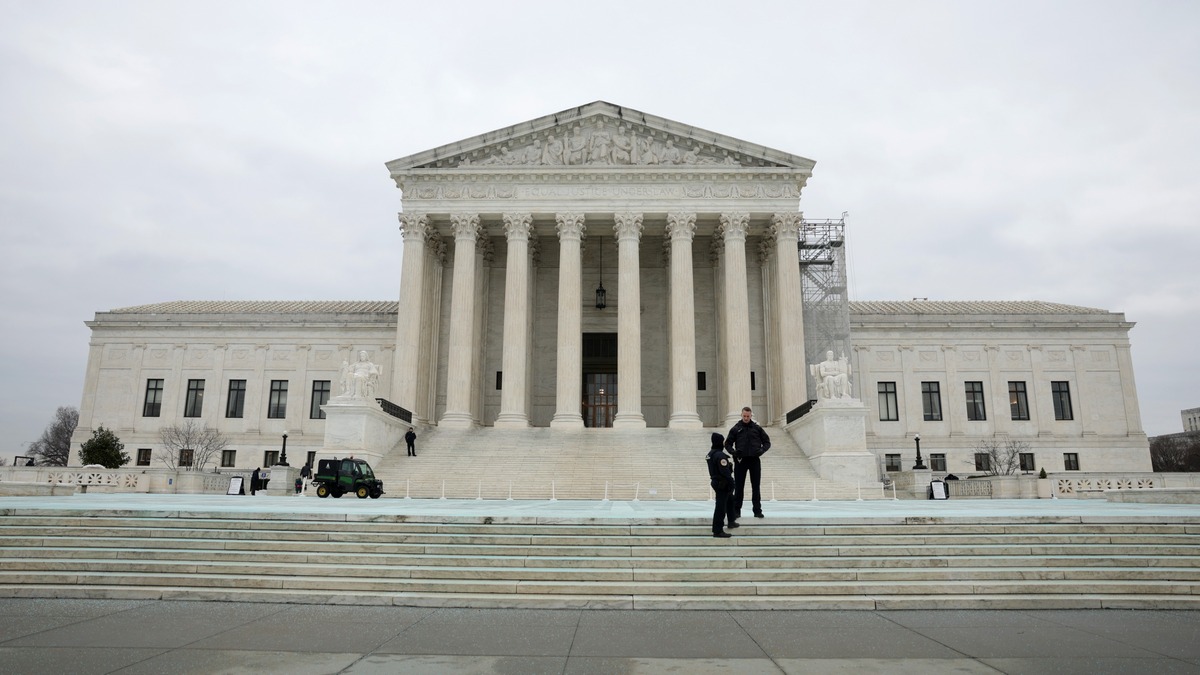
On February 20, the U.S. Supreme Court, in a six-to-three decision, ruled that the majority of tariffs imposed by the administration of Donald Trump are unlawful. The Court found that the International Emergency Economic Powers Act (IEEPA) does not grant the president authority to impose tariffs — those powers under the Constitution belong to Congress.
What the ruling says
The Court upheld the findings of the lower courts: using IEEPA to set tariffs exceeds the emergency powers the statute grants the executive branch. The Court also pointed to historical practice: in the half-century since IEEPA’s enactment no president had used the act to impose tariffs, which further indicates the absence of such an authority in the law.
"The United States International Emergency Economic Powers Act (IEEPA, 91 Stat. 1626) does not grant the president authority to impose tariffs"
— U.S. Supreme Court, ruling
Context: what was done
The Trump administration, at the end of its term, declared a national emergency and imposed tariffs of 10% to 25% on a wide range of imports. The tariffs took effect on August 7, after which the average effective tariff rate rose to over 17% — the highest level since 1935.
Why this matters for Ukraine and business
The Supreme Court’s decision has a twofold effect. On one hand, it limits the president’s ability to act unilaterally — in the future imposing tariffs will require clearer legislative authorization from Congress. For businesses and partners this increases legal predictability. For Ukraine, it means trade and logistics risks caused by sudden changes in U.S. tariff policy may be reduced.
On the other hand, restricting the executive branch raises questions about the speed of response to real national security threats, when rapid action matters. Trade policy analysts note that there will now be greater pressure on Congress to pass special authorities or a clearer regulatory framework for such cases.
Reactions
"If the Supreme Court rules against the United States of America in this national security case, WE'RE DONE!"
— Donald Trump, former president (post on Truth Social)
Reaction ranged from legal arguments to political assessments. Lawyers emphasize the separation of powers between Congress and the president; politicians focus on the political consequences for future trade negotiations and sanctions practice.
What’s next
The most likely scenario is political and legislative pressure from those who believe administrations need greater agility on trade and security issues. Congress is now at the center: either it adopts new authorities for the administration, or the power over tariffs remains exclusively with legislators.
For Ukraine and its partners, the decision is a reminder of the value of legal predictability in the global economy. In a situation where material support and defense cooperation depend on the reliability of supplies and clear rules, the stability of U.S. trade policy has a direct impact on our strategy.
Will lawmakers be able to quickly develop mechanisms for critical cases without undermining the principle of separation of powers? The answer will determine how flexible and predictable U.S. trade policy remains.



