EU may suspend ratification of agreement with the US over new tariffs — risks to supplies and prices in Europe and Ukraine
Bernd Lange convened an emergency meeting after the US decision to impose new tariffs. We examine why this is important for the EU economy and what repercussions it could have for Ukraine.

By Tetiana Suchkova-Ladik
February 23, 2026 · 2 min read
Position of the European Parliament
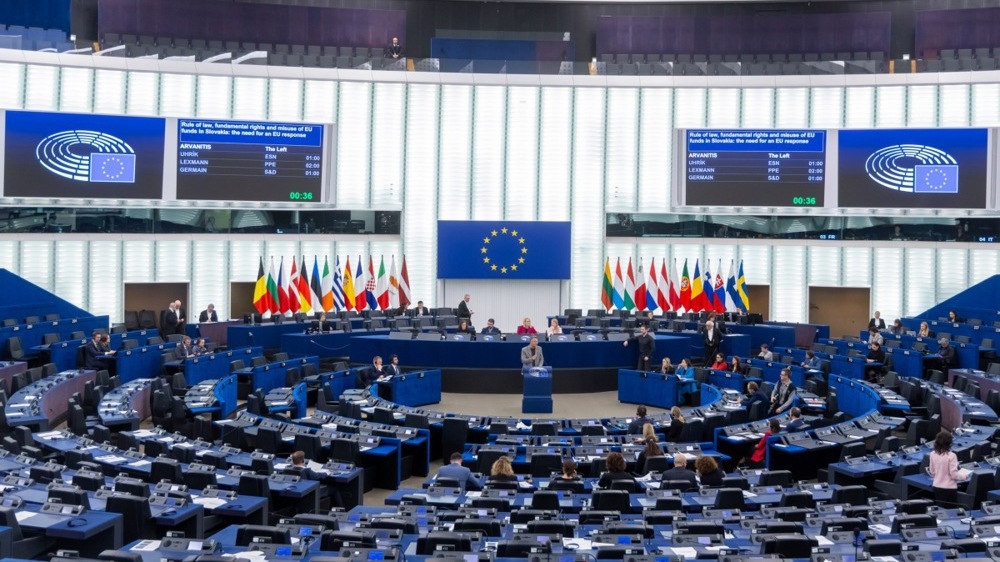
According to Bloomberg, the chair of the European Parliament's Committee on International Trade, Bernd Lange, has called an emergency meeting for 23 February to review the framework trade agreement between the EU and the US. Lange urged suspending the ratification process until there is clarity on the new tariffs announced by US President Donald Trump. A vote in the Parliament had been scheduled for March — that date is now in doubt.
"The Parliament must pause work on the agreement until the EU receives greater clarity on the new tariffs."
— Bernd Lange, chair of the European Parliament's Committee on International Trade
What happened
After the US Supreme Court struck down part of the tariffs imposed under the IEEPA, the Trump administration announced it would replace those measures with a new tariff regime based on Section 122 of the Trade Act of 1974. Initially the additional levy was 10%, but the next day it was raised to 15%. The regime takes effect on 24 February 2026 and will remain in force for 150 days unless Congress extends it.
At a 15% rate, the US weighted average tariff would be about 13.2%; for comparison, before the court decisions it was 15.3%, and after the IEEPA tariffs were struck down it temporarily fell to 8.3%.
"The EU has no choice but to delay the approval process in order to seek clarification of the situation."
— Zeljana Zovko, the EPP group's lead trade negotiator
Consequences for the EU and Ukraine
The decision affects key categories — automobiles, pharmaceuticals, semiconductors and timber — which were already referenced in the framework agreement. Higher tariffs mean a risk of more expensive imports, disruptions to supply chains and an acceleration of inflationary pressure.
For Ukraine this has three practical dimensions: first, rising prices for European components and medicines could increase the cost of reconstruction and medical treatment; second, delays or complications in the supply of semiconductors and equipment weaken the pace of modernization of the defense industry and civilian networks; third, political tension diverts partners' attention away from coordination on sanctions and support for security programs.
The European Parliament has already had a precedent of freezing proceedings over tariff threats before (in the case of Greenland). At that time the issue was resolved diplomatically — but now it concerns a broader package of goods and a direct impact on strategic supply chains.
What happens next
The EU will most likely demand explanations and guarantees, and negotiations over exemptions for critical supply chains are possible. If ratification is indeed suspended, it will delay implementation of the agreement and create additional market instability.
For Ukraine it is important to monitor events and insist that security interests be taken into account in diplomatic and trade negotiations — in particular guarantees for the supply of critical components and medicines. While partners coordinate positions, Kyiv needs to work on two fronts: preserve supply chains and strengthen import diversification.
Whether the EU can convert political pressure into technical guarantees for key sectors — that will determine how hard the new tariffs hit the Ukrainian economy and security.