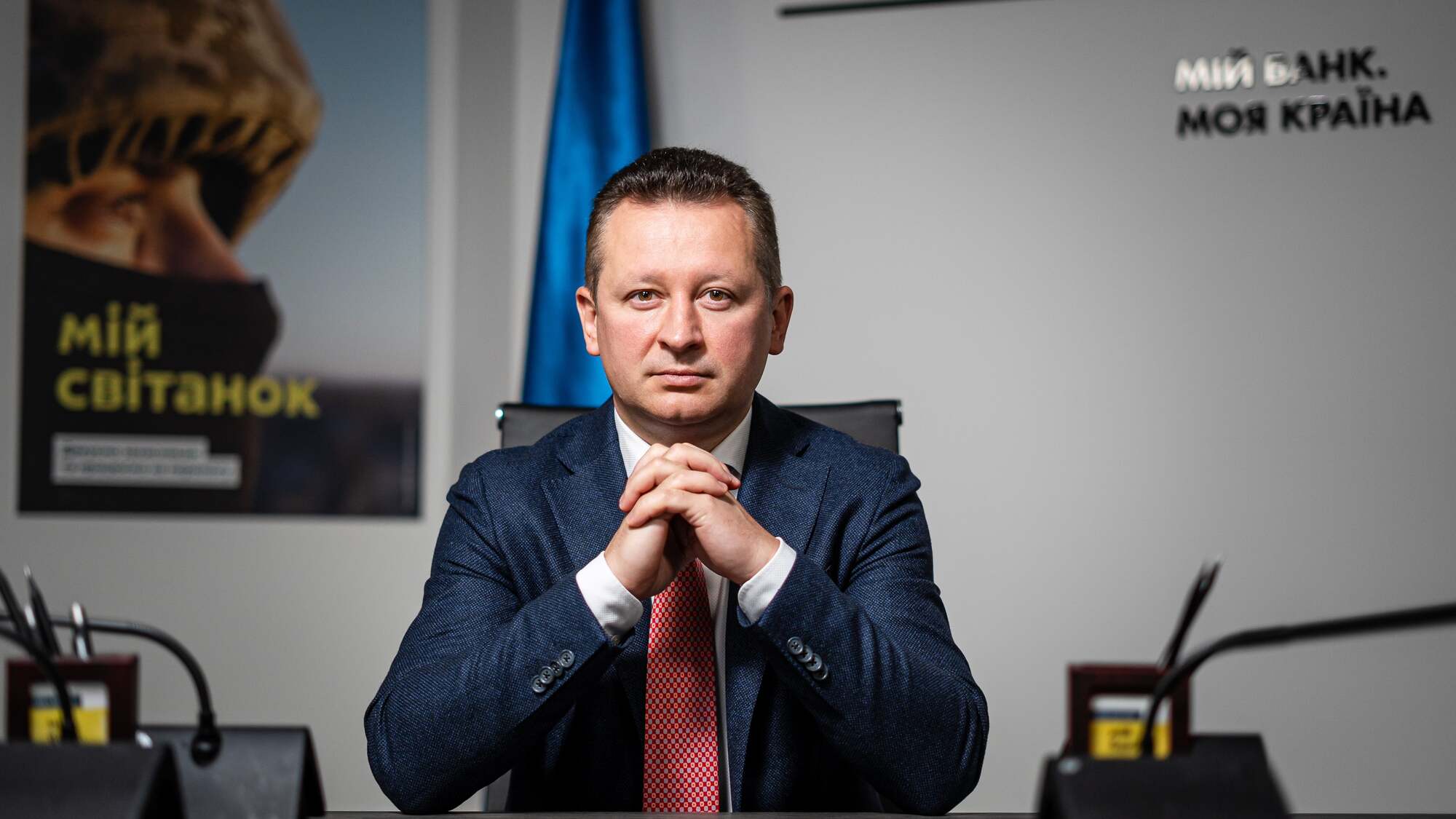
Yurii Katsion appointed head of Oschadbank — what it means for business and recovery
The country's largest state-owned bank has appointed a new chairman of the management board after receiving approval from the National Bank. We examine why the manager's experience matters for lending to businesses, international cooperation, and financial resilience during the reconstruction.

By Tetiana Suchkova-Ladik
January 26, 2026 · 2 min read
In brief
Yurii Katsion has officially begun his duties as chair of the management board of Oschadbank after his candidacy was approved by the National Bank of Ukraine, the bank reported. The appointment comes against the backdrop of Oschadbank's approved strategy through 2028.
Why it matters
Oschadbank is one of the key instruments of state financial policy. A change in leadership means not only a change of person but also a potential acceleration in implementing strategic priorities that affect the availability of credit for businesses, cooperation with international partners, and financing the reconstruction of infrastructure.
The bank's strategy through 2028 emphasizes: support for business, partnerships with international institutions, expanded access to financial services, and strengthening resilience amid war and rebuilding. For clients, this means a focus on corporate products and project financing for activities critical to infrastructure recovery.
About the new head
Katsion has worked at Oschadbank since 2001 and has more than 27 years of experience in the banking sector. Prior to his appointment he served as Deputy Chair of the Management Board for Corporate Business, holds a degree from Kyiv National Economic University in management of banking investments, and has participated in implementing investment projects.
The decision to promote internally underscores the board's and the regulator's desire to rely on institutional memory and experience during the period of economic recovery.
"In his new role Yurii Katsion will ensure the consistent implementation of Oschadbank's five‑year strategy"
— Volodymyr Lavrenchuk, chair of the supervisory board of Oschadbank
Market and context
At the same time, the banking market is seeing changes in the private segment: Pravex Bank (part of the Intesa Sanpaolo group) was headed by Semen Babaiev from January 1, replacing Gianluca Corrias. This indicates that both the state and private sectors are undergoing management renewal and adapting to new challenges.
What next
In the short term, the key will be the new chair's first steps to implement the strategy: personnel decisions in managing corporate portfolios, clarifying priorities for cooperation with international partners, and launching projects to support business. Banking analysts point out that not only declarations matter but also the resourcing of initiatives—loans, guarantees, and international lines of financing.
For society the question is simple: will strategic plans be turned into concrete financial instruments for reconstruction—and how quickly. The coming months will show whether the new leadership will provide Oschadbank with stability and practical solutions for the economy.