# Twice in Two Months: How Asvio Bank of the Suprunenko Brothers Collects Assets of Bankrupt Banks
# Over just two months, Asvio Bank won FGVFL competitions twice — first acquiring Kominvestbank's assets, now Motor Bank's. This is no coincidence, but a documented growth strategy through other banks' bankruptcies.

By Tetiana Suchkova-Ladik
April 7, 2026 · 2 min read
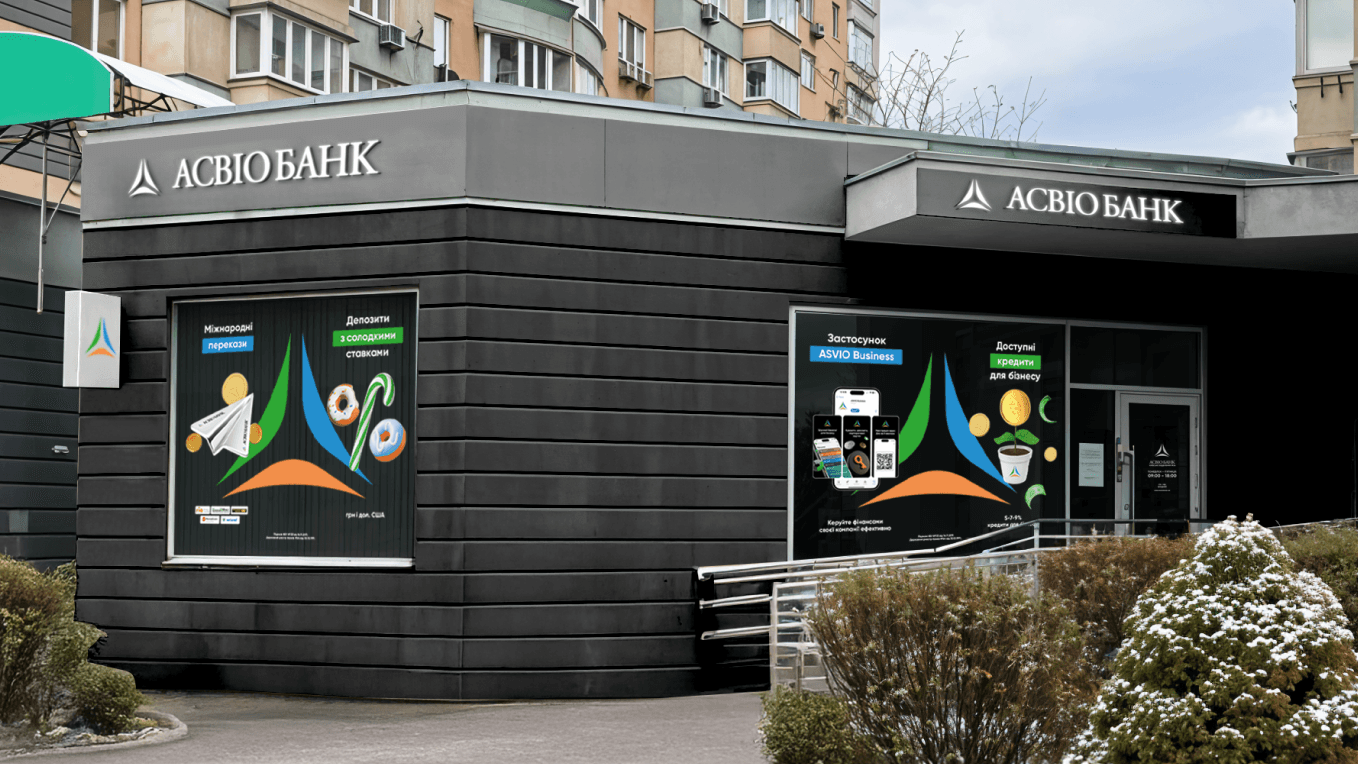
On April 3, the Deposit Guarantee Fund signed an agreement with Asvio Bank on the transfer of assets and liabilities of the insolvent Motor Bank. 89.3 million UAH in obligations to depositors and creditors — together with a credit portfolio of 150 million UAH, acquired at 30% above book value. This was announced at a briefing by Olha Bilai, executive director of the DGF.
For Asvio Bank, owned by brothers Vyacheslav and Oleksandr Suprunenko, this is already the second such deal in two months. On January 31, 2025, the bank acquired part of the assets and liabilities of Kominvestbank — the total guaranteed amount of compensation to its depositors was 477.6 million UAH.
The Logic of a Serial Buyer
Yevhen Shulika, chairman of Asvio Bank's board, explained the mechanism openly: the bank deliberately seeks such deals as a tool for rapid growth.
«Acquiring assets is a classic tool for rapidly expanding our presence in priority markets, which frees up time and resources that we have already invested in strategically important projects for us».
Yevhen Shulika, chairman of Asvio Bank's board, interview with NV
Buying assets of bankrupt banks through the DGF is cheaper and faster than organic growth: there is no need to build a client base from scratch, negotiations with the Fund's structures are more transparent than private M&A deals. From the DGF's perspective, it is also beneficial: the receiving bank takes on depositor payments, relieving the state guarantee fund.
Who is Motor Bank and Why It Matters
According to the NBU as of early 2025, Motor Bank ranked 56th among 60 Ukrainian banks by total assets — 379.2 million UAH — and had a loss of 16.3 million UAH. The NBU recognized it as insolvent due to violations of capital requirements. In the tender, according to Bilai, 11 participants showed interest — five banks and six non-banks, but some non-banks did not pass the preliminary qualification by the National Bank.
After the completion of the asset transfer, Motor Bank's license will be revoked and the legal entity will be liquidated.
From «Boutique Bank» to Portfolio Buyer
Asvio Bank is a Chernihiv institution founded in 1991 that operated for a long time in the format of a «boutique bank» for a narrow circle of premium corporate clients. As recorded by Forbes Ukraine, since 2022, the bank has been building a new model — with digital transformation and an open retail direction. Authorized capital — 393.66 million UAH, uaAAA rating with a «developing» forecast (December 2025).
The strategy of acquiring portfolios of bankrupt banks became a practical accelerator: in two months, the bank acquired clients and assets that would have taken years to accumulate organically.
- January 31, 2025 — agreement signed with the DGF on Kominvestbank's assets (477.6 million UAH in guaranteed obligations)
- March 31, 2025 — tender on Motor Bank's exit
- April 3, 2025 — agreement signed on Motor Bank's assets (89.3 million UAH)
An open question remains — whether the DGF has an internal limit on concentration: if one private bank systematically becomes the main «absorber» of insolvent institutions, risks accumulate with the portfolios in case of that bank's possible future difficulties. The answer to this question will matter if Asvio Bank moves to a third deal of this type.