ZEN.com invests 200 million hryvnias into PINbank — exactly the amount needed for a license
A Lithuanian fintech company with Polish roots is recapitalizing the bank acquired from the FUIB to the minimum regulatory threshold. This is not development — this is an entry ticket.

By Tetiana Suchkova-Ladik
May 11, 2026 · 3 min read
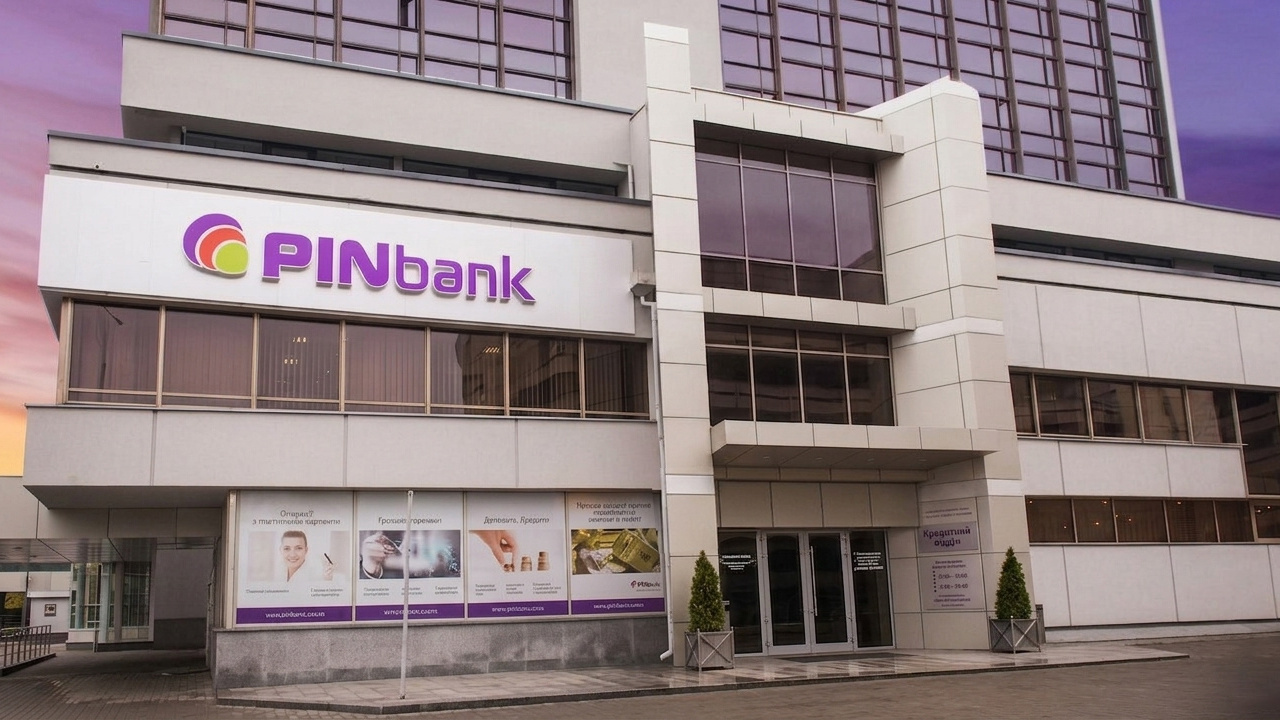
ZEN.com, a fintech company registered in Lithuania, announced the issuance of 13.6 million new shares of the First Investment Bank (PINbank) with a nominal value of 14.7 hrn per share — totaling 200 million hrn. The sum is not coincidental: this is exactly the minimum regulatory capital that the NBU requires from any bank in Ukraine.
A bank that twice failed to meet requirements
At the time PINbank was recognized as insolvent in February 2026, its regulatory capital was only 73 million hrn — less than one-third of the norm. The bank's total assets at exit from the market were 163 million hrn, of which 54 million hrn in liquid funds, 81 million hrn in fixed assets (real estate in central Kyiv, 16 ATMs, 290 terminals) and 20 million hrn in government bonds. In 2025, the bank incurred a loss of 63.2 million hrn.
Before that — a short but illustrative biography. Initially, PINbank belonged to Russian Yevhen Giner, president of Moscow's CSKA. Due to NSDC sanctions, the court confiscated the asset and the bank was nationalized in early 2024. Then a merger with Ukrposhta was considered — the NBU blocked it: the postal operator itself is unprofitable and itself needs recapitalization.
Who bought it and how much they paid
ZEN.com acquired 100% of PINbank's shares for 175 million hrn. As reported by FGVFO director Olga Bilai, this is more than twice the bank's book capital and exceeds the independent appraiser's valuation. The state earned 175 million hrn on the deal — for a bank that had failed to meet standards for years.
"By combining strong local presence with ZEN's global technology and infrastructure, we aim to accelerate access to innovative financial services and support Ukraine's economic development."
David Rozhek, CEO of ZEN.COM
The company itself is not a startup. ZEN.com was founded in 2018 in the Polish city of Rzeszów by entrepreneur David Rozhek, previously co-founder of the gaming marketplace G2A. Registered in Lithuania, it holds electronic money licenses in Lithuania and the United Kingdom, a payment license in Singapore, and operates in 32 markets. The group's revenue for 2025 exceeded €115 million, with a customer base of over 1.5 million retail users and 10,000 businesses.
After completing his presidential duties in August 2025, Andrzej Duda joined ZEN.com's supervisory board. He traveled to Kyiv for the official presentation of the new owner at FGVFO on April 22 — and stated that the company bought PINbank with an eye toward participating in post-war reconstruction.
What they promise — and what it means
ZEN.com announced its intention to invest 20 million euros in Ukraine over the coming years and has already identified a key direction: cross-border payments and money transfers between Ukraine, the EU, and the United Kingdom. The logic is clear — the company already has infrastructure in these markets, and demand for transfers between Ukrainians in Europe and at home remains consistently high.
The company's CEO in Ukraine, Anton Medvedev, who has held the position since November 2025, previously spent nearly six years managing branch operations at the former Alfa-Bank. This is an operational, not technological profile — a hint that the first stage will focus on network stabilization rather than product revolution.
Recapitalization of 200 million hrn is the minimum for obtaining a full banking license, not a ceiling for ambitions. If ZEN truly plans to build a payment bridge between Ukraine and Europe through a banking structure, the next step would be to increase capital to at least a level that allows scaling lending or settlement operations for businesses.
The question is simple: will we see a second capital tranche — and when exactly will ZEN reveal its product strategy for the Ukrainian market, rather than just rhetoric about reconstruction?