Ten Barracks Instead of Temporary Headquarters: What the Largest Military Reform Changed Since the Full-Scale Invasion
The Armed Forces of Ukraine have completed the transition from temporary operational groupings to permanent army corps — but the main problem remains: brigades are still sometimes scattered across different command structures.

By Tetiana Suchkova-Ladik
June 10, 2026 · 2 min read
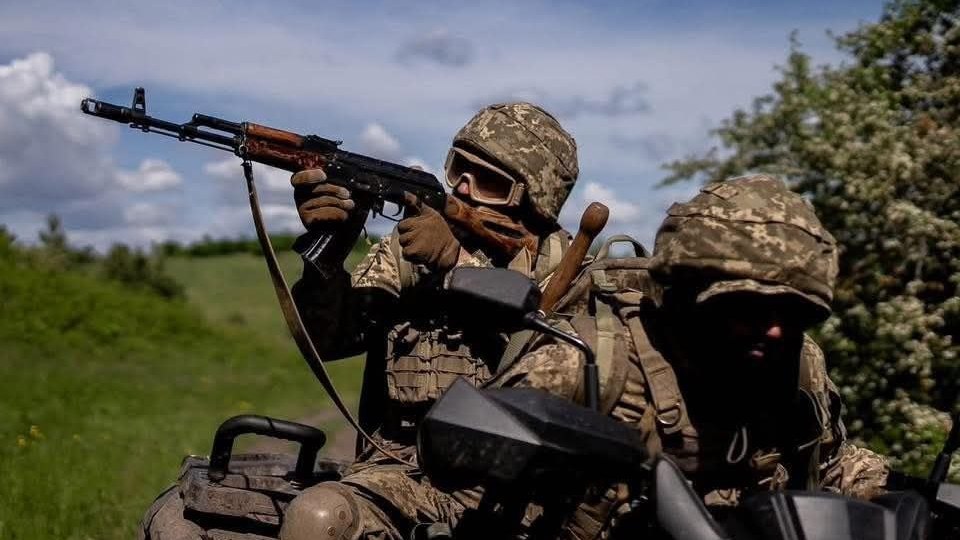
Andriy Hnatov, Chief of the General Staff of the Armed Forces of Ukraine, called the corps reform risky but justified in an interview with LIGA.net. This is the largest structural change in the army since 2022 — and it took place right during active combat operations.
What exactly changed
Before the reform, front management was carried out through operational-tactical formations (OTUF) and operational formations of troops (OFT). Their fundamental flaw was temporariness: commanders did not know their brigades, battalions from one brigade could fight in different parts of the front under different command, and the headquarters themselves were essentially only a communication link between the General Staff and brigades.
Now, instead, there are ten newly created corps with permanent staffing and their own structure. According to Hnatov, the most prepared officers of the Armed Forces of Ukraine and instructors from partner countries were involved in preparing their personnel. All ten corps headquarters underwent training simultaneously — and this, according to him, required "considerable effort."
"Thanks to the corps reform, the enemy's plans for rapid offensive operations in Donetsk, Kharkiv, and Zaporizhzhia regions were not realized."
Andriy Hnatov, Chief of the General Staff of the Armed Forces of Ukraine
Why this matters now
The corps model is not a Ukrainian invention. Russia transitioned to it earlier, and according to analysts, this gave it advantages in coordinating offensive operations. As noted by the Jamestown Foundation, the reform also brings the Armed Forces of Ukraine closer to NATO standards: the "corps — division — brigade" structure is the baseline for joint planning and interoperability with allies.
According to Frontliner, a total of 18 corps are being formed across different branches of the armed forces. Each corps combines approximately five brigades and is subordinate to one of four regional commands. The integrated structure includes artillery, drone units, logistics, and intelligence under unified command.
What remains unresolved
Analysts from Kyiv Independent and Jamestown point to a key problem that the reform has not yet fully overcome: duplicate subordination of brigades. Units are still sometimes subordinate to several levels simultaneously, which hampers the transition to fully independent corps operations. Micromanagement from higher headquarters, which was a chronic problem of OTUF, will not disappear automatically with a change in the structure's name.
- Reform advantage: permanent composition — a corps commander knows his brigades, rather than receiving them "on assignment"
- Reform advantage: faster decision-making on a front spanning over 1,000 km
- Risk: full staffing and coordination of corps are not yet complete
- Risk: the transition occurred under pressure from active combat operations — some decisions may have been made in an "as is" manner rather than "as needed"
The reform demonstrated that the Armed Forces of Ukraine are capable of systemic changes during wartime. But its real effectiveness will not become apparent from Hnatov's statements, but rather from whether the corps can conduct coordinated operations on several fronts simultaneously — without micromanagement from above and without scattering brigades. If by the end of 2025 at least one corps conducts such an operation independently — the reform can be considered not just structural, but combat-effective.