Yermak collected memorandums — signed one, didn't sign the other. Lubinets explained the difference
After his resignation from the Office of the President, Andriy Yermak is systematically building an infrastructure of influence through the legal profession: a memorandum with the military ombudsman's office has already been signed, while his approach to the civilian ombudsman's office received a refusal and a public explanation of why.

By Tetiana Suchkova-Ladik
June 10, 2026 · 3 min read
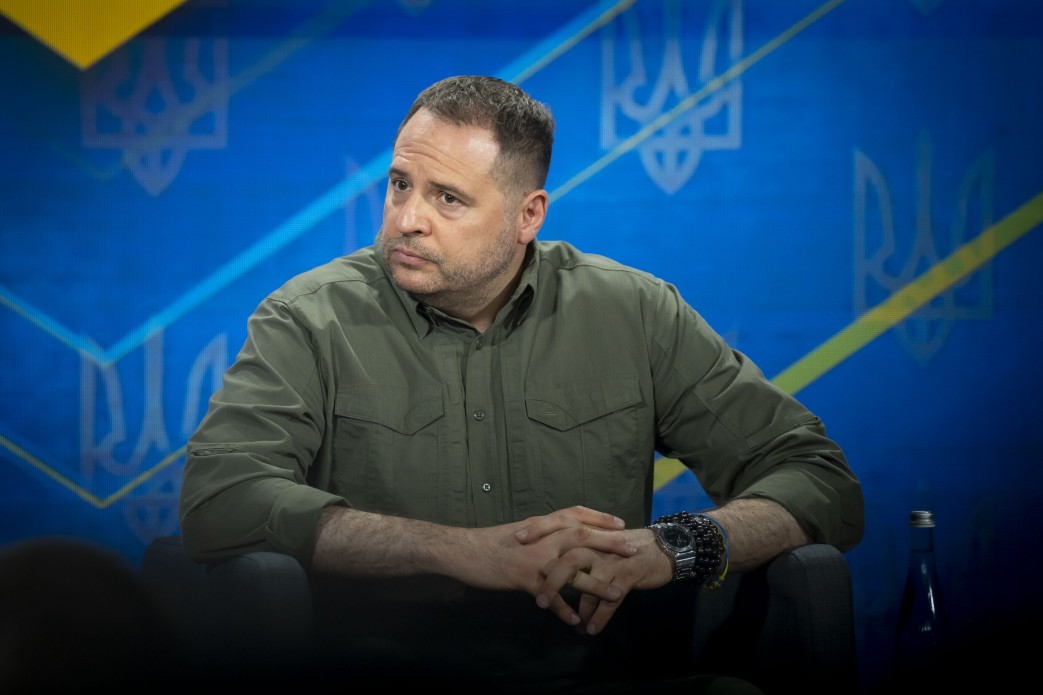
Ombudsman of the Verkhovna Rada Dmytro Lubinets told Radio Free Europe in an interview that after Andriy Yermak's dismissal from the Presidential Office, Yermak called him personally — now as a lawyer — and offered to sign a memorandum of cooperation in the field of protecting the rights of war victims. Lubinets refused.
A detail that most news reports left on the periphery: this was not the first such memorandum. Yermak had already signed a similar document with the office of the military ombudsman. In other words, Lubinets' refusal is not simply a personal choice, but a break in a chain that was being consistently built.
New role, familiar tools
Yermak left the Presidential Office on November 28, 2025, following a decree by President Zelensky. The next step was swift: in January 2026, he renewed his lawyer's license, which had been suspended since 2020. In March, the NAAU — at the direction of the association's head Lidia Izovitova — created a separate Committee on the Protection of Victims of Armed Aggression and Compensation Mechanisms for him.
Around the same time, a series of meetings with officials began. As Ukrainian Pravda documented, texts of news reports about meetings with various institutions on the NAAU website were almost identical — and each ended with the signing of a memorandum.
"He said that now, as a lawyer, he is engaged in protecting the rights of war victims and proposed cooperation... He offered to sign a memorandum".
— Dmytro Lubinets, Ombudsman of the Verkhovna Rada, in an interview with Radio Free Europe
Why "no" is an argument, not a refusal
Lubinets' logic for refusing is non-trivial. He did not cite a conflict of interest and did not speak about reputational risks. His argument was institutional:
"I believe that if I sign a memorandum with an additional tool for protecting human rights, then I automatically am not doing my job".
— Dmytro Lubinets
In other words: the need to involve external structures means acknowledging one's own insufficiency. The ombudsman also clarified that state bodies created to protect citizens' rights must themselves demonstrate effective work — rather than delegating it through documents without a control mechanism.
A parallel track
However, the military ombudsman, with whom the memorandum was indeed signed, evaluated the agreement positively. According to her, the initiative came from Yermak, and the office is already passing cases of servicemen that exceed its own competence to the NAAU. As an example — the case of a soldier whose home was destroyed by a Shahed, the state paid compensation, but the developer did not fulfill its obligations.
That is, in practice, the memorandum with the military ombudsman is already generating streams of cases — and, accordingly, Yermak's public presence in the sensitive topic of supporting veterans.
- November 2025 — dismissal from the Presidential Office
- January 2026 — renewal of lawyer's license
- March 2026 — committee at NAAU, memorandum with military ombudsman
- May 2026 — HACC chose a preventive measure: detention with a bond of 140 million hryvnia
- June 2026 — Lubinets' public refusal
In May, the High Anti-Corruption Court chose a preventive measure for Yermak — detention with the right to a bond of 140 million hryvnia. The court rejected the appeal.
If the criminal proceedings gain momentum, the question will be concrete: will the signed memorandums — and the refusal to sign them — become arguments in a dispute over what role exactly Yermak was building after leaving office.