# Wedding in 20 Days, Dress in Ashes at "Kvadrat" Shopping Center. What Unknown Ukrainian Women Did
Daria Slesarenko lost her wedding dress in a fire after a Russian strike on Kyiv's Shevchenko district — and received dozens of offers from women willing to give their own dresses. A personal loss became a focal point for collective memory of what the war has left behind.

By Tetiana Suchkova-Ladik
May 25, 2026 · 2 min read
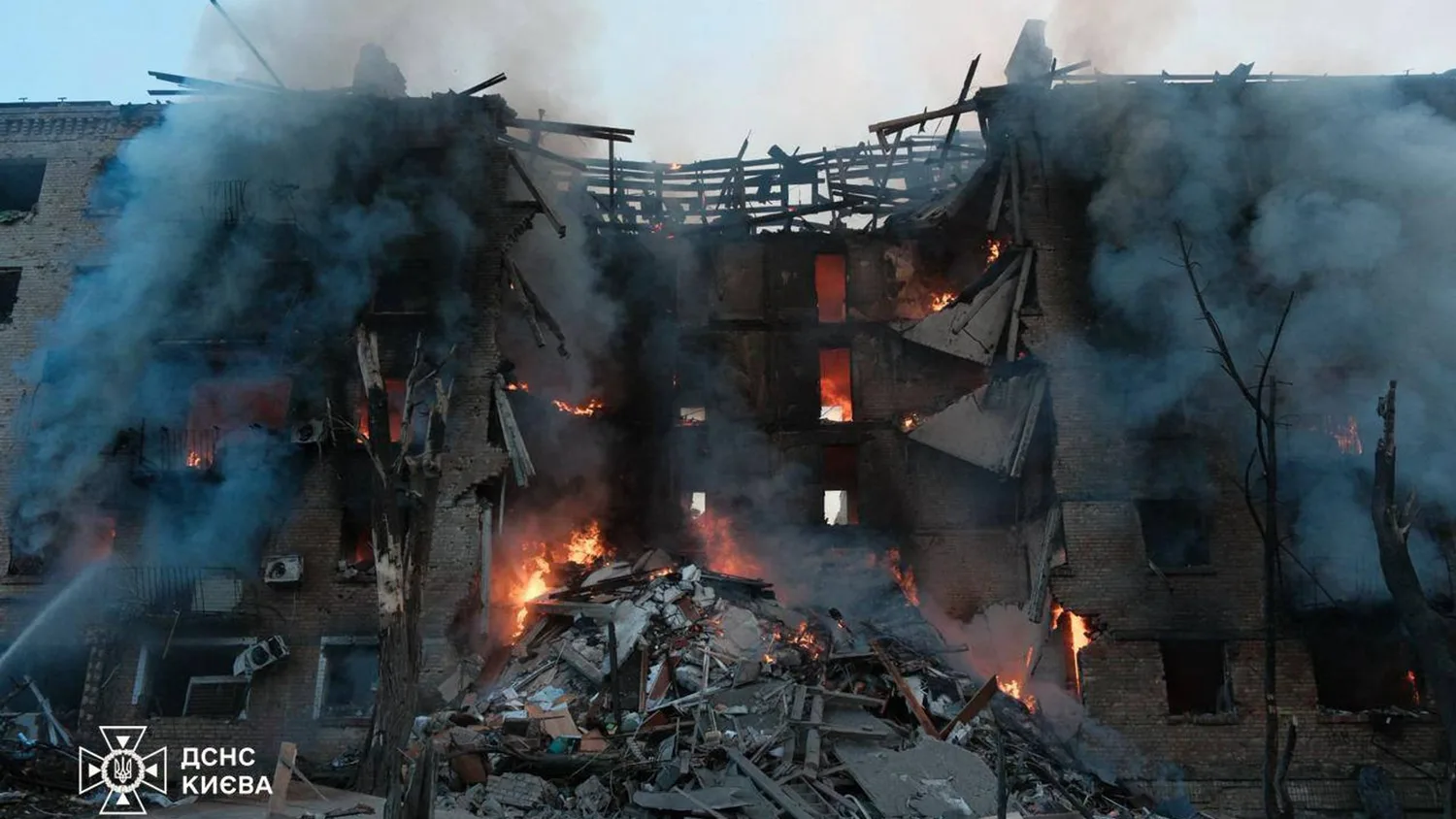
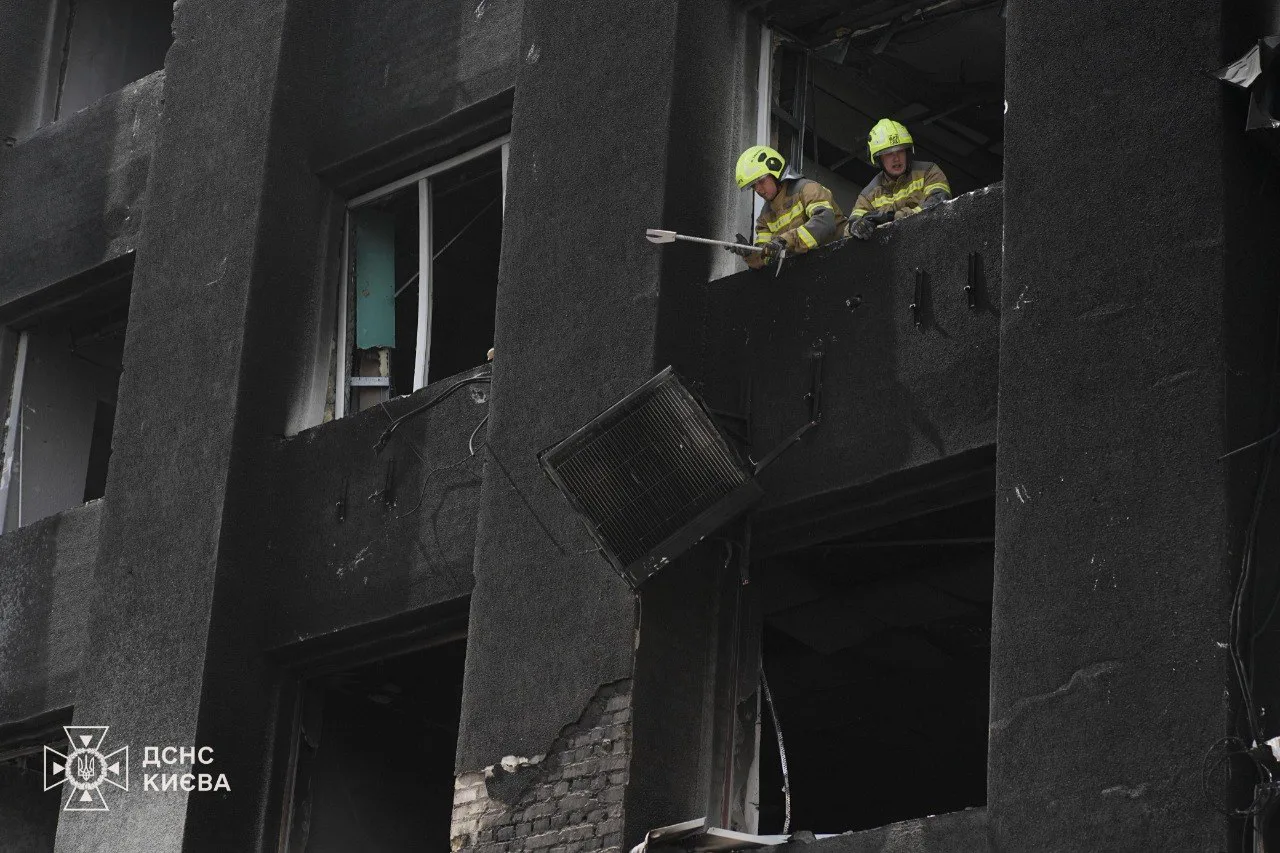
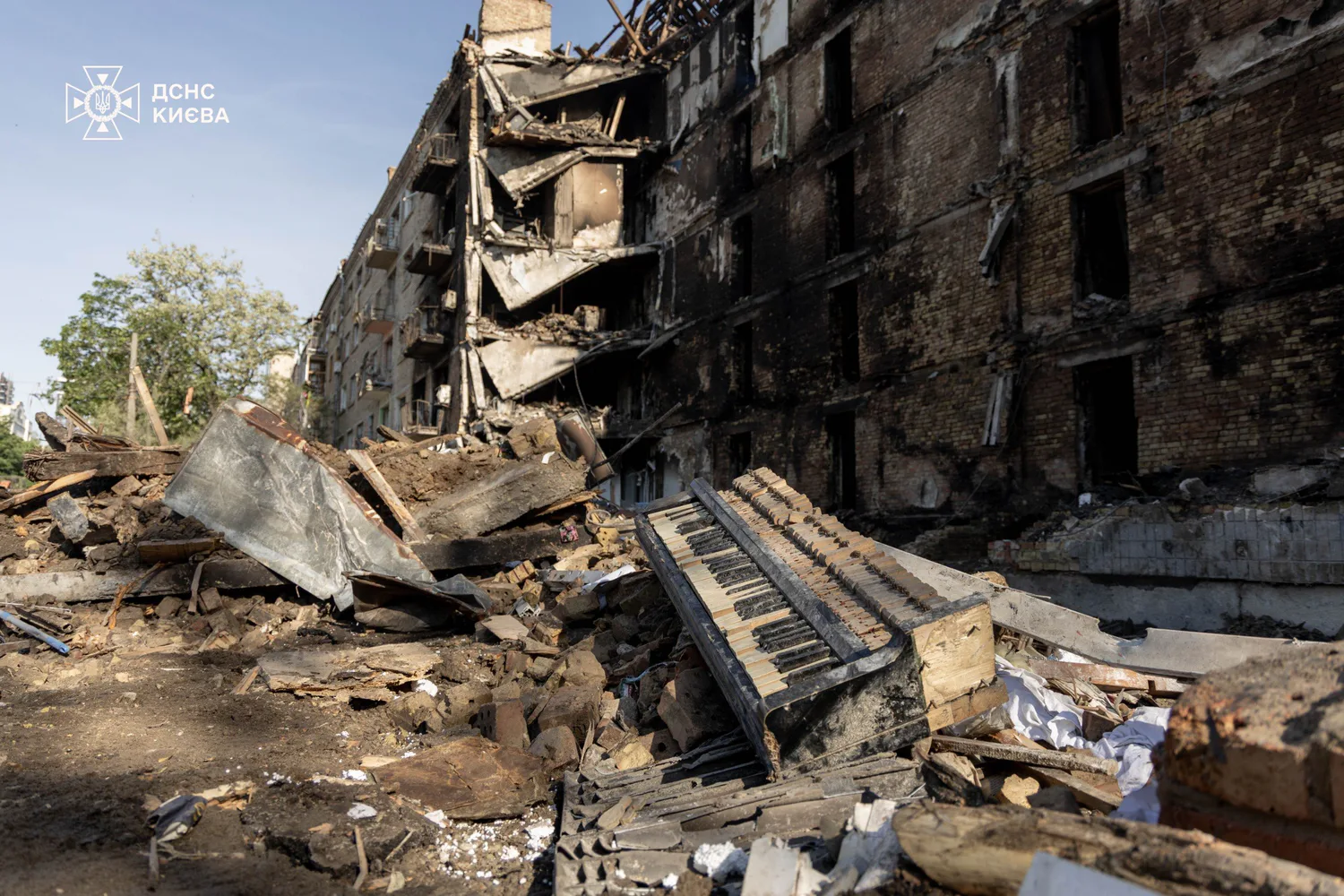
On the night of May 24, Russia launched a massive attack on Kyiv using ballistic and cruise missiles, aeroballistic Kinzhal missiles, and attack drones. One of the destruction hotspots was the Kvadrat shopping center in the Shevchenko district: the building suffered critical damage, the facade was charred, and internal structures were destroyed. At least one person was killed, and over twenty were injured.
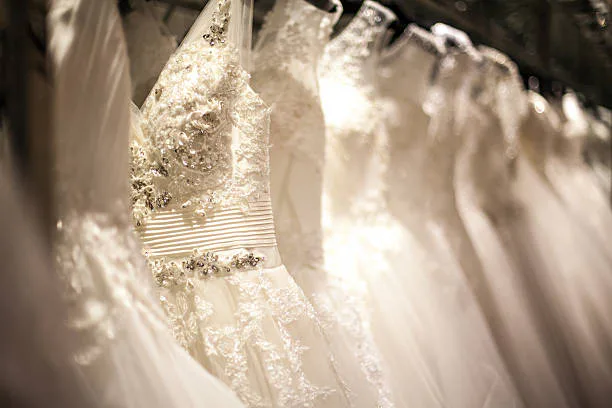
Among those who learned about the extent of the destruction early in the morning was Kyivian Daria Slesarenko. Her wedding dress was in a tailor shop inside the shopping center for alterations. The wedding was 20 days away.
"I just realized that my wedding dress in Kvadrat shopping center burned down—the one I gave for alterations. The wedding is in 20 days…"
— Daria Slesarenko, Threads
More Than Just a Dress
The post went viral—and quickly transformed from a simple request for help into a place where people recalled their own losses. One woman wrote that because of the full-scale invasion, she had left shoes in a workshop in Mariupol and never returned for them. Her house was later destroyed by occupiers. Dozens of Ukrainian women offered Daria their own wedding dresses—an item that typically is not even lent to close relatives.
Comments also included a different kind of support: "Consider it a down payment for a long and happy life," "It took the dress, not your health—let it be so." This is not optimism—it is a way to live in a country where you calculate what exactly you lost this time.
An Unsolicited Response
Later, Daria separately thanked everyone who wrote after her post. According to her, she received a huge number of messages and support from strangers. A wedding dress is a personal treasure for every woman, and that is exactly why the gesture from strangers means more than simply solving a practical problem.
- The May 24 attack covered over 40 locations in Kyiv
- Residential buildings, schools, the Lukyanivskyy market, and Lukyanivskyy subway station were affected
- Kvadrat shopping center suffered critical destruction—the building remains unrepaired
If dozens of strangers are willing to give the most personal item in their wardrobe—does this mean that Ukrainian society has developed its own, non-institutional system of mutual support that works even when the state is simply documenting losses?