Usyk Defended WBC Title in Giza: Kickboxing Legend Lasted 10 Rounds — and Almost Made It
The first boxing match in history near the pyramids ended in a technical knockout in the 11th round. Verhoeven — the strongest kickboxer of his generation — went the distance for most of the bout and fell literally seconds before the bell.

By Tetiana Suchkova-Ladik
May 25, 2026 · 2 min read
"Glory in Giza": Why This Is No Ordinary Title Defense
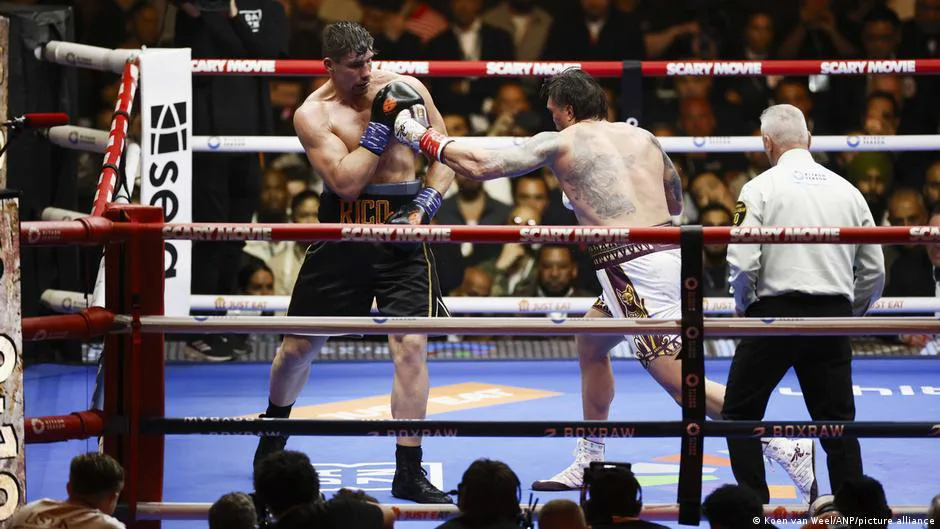
Oleksandr Usyk's fight against Rico Verhoeven on May 24 in Egypt is not just another championship belt defense. It is the first professional boxing match in history held near the Egyptian pyramids. The promotional company Matchroom and the streaming service DAZN branded the show "Glory in Giza" — and the location worked as a separate participant in the event.
The WBC heavyweight title was on the line. The WBA and IBF did not sanction the bout, so Usyk entered as the current holder of three titles — WBC, WBA, and IBF — won in July 2025 after his victory over Daniel Dubois at Wembley.
Verhoeven — Not a Bit Player
Rico Verhoeven came to this fight with a boxing record of 1-0, but the main thing in his resume is 49 victories in kickboxing and the status of one of the most decorated representatives of this sport in its entire history. He is heavier and more massive than Usyk, and the first ten rounds made this felt: constant pressure, sweeping blows, and several dangerous moments for the Ukrainian.
"Verhoeven played the role of a true challenger — he didn't just show up for photos by the pyramids"
ESPN after the fight
Usyk entered the bout at odds of -2500 according to DraftKings — meaning the betting market perceived the result as almost predetermined. But ten rounds of real confrontation put this confidence in doubt.
The Final: Knockdown One Second Before the Bell
In the 11th round, Usyk landed a powerful uppercut, sending Verhoeven down. The referee allowed the fight to continue. The Dutchman got up — and moments later received a barrage of punches, after which the referee stopped the bout. Technical knockout. One second before the final bell.
Usyk remains undefeated: 25 fights, 16 knockouts. Verhoeven is 37 years old, and this was only the second boxing match of his career.
Crossover as a Format
The Usyk-Verhoeven match is part of a broader trend: top kickboxers and MMA fighters are increasingly stepping into the boxing ring for marquee names and purses. Verhoeven was not the first and certainly won't be the last. The question is not whether the boxer will win — the question is how many rounds an athlete from another sport will last and whether it will be a spectacle.
In this case — yes. Ten rounds of tension before a finale one second before the bell proved to be sufficient for viewers of DAZN around the world.
If Usyk's next opponent is again a representative of another combat sport — will the WBA and IBF be ready to sanction such fights, or will the "WBC only" format become the ceiling for crossover shows?